Baby, it’s cold outside!

WinterDog

you know that hat is very slimming

Here’s the truth of it. Mother Earth, the blue planet, our very own 3rd rock from the sun is perfect for us. By that I mean this planet has more than enough places (from Bangkok to New Jersey) that are both warm and cool enough for us to survive and thrive as a species. Our solar system is a rough neighborhood. Even on the surface of the moon there is at least a 450° F difference between standing in the light and the shade. So believe me brothers and sisters when I say that it is truly remarkable that we get to hitch a ride on this cosmic trolley called Earth.

sumo

Asashoryu is not impressed by your skinny jeans.

The human body has special needs. Our metabolism functions optimally within a narrow, warm fuzzy range between 36.5° C and 37.5° C (98-100° F). Most of us don’t climb much further than 98.6° F (hyperthermia) unless we’ve caught a nasty flu virus or overslept on a tanning bed. Now that is one tight range for homeostasis to be maintained. I’m talking tighter than a sumo wrestler in skinny jeans. This is the range where our enzymes can function optimally, where our cells can use energy stored in glucose, where blood can adequately deliver oxygen in exchange for carbon dioxide, and an [EXPLETIVE] load of other vital, biochemical gymnastics.

“Hypothermia” – is not an 80’s Hair Band

Medically speaking, hypothermia is the state at which your core body temperature drops below 35° C (95.0° F) but I’m willing to bet that for your core temperature to slide down even 3 degrees you’re already feeling pretty cold and have been for some time. If you put the lid on a warm cup of coffee and set it in the freezer you’d be lucky to find iced coffee waiting for you even a half hour later. The human body has water tight skin, fat tissue, body cavities, and many times the volume of a 16 oz cup of Joe. So when we get cold it’s the real thing and our body fights for us right up to the very end.

A word or two about Vasoconstriction

Consider that the blood flowing through our veins carries heat. So when we start to lose heat the blood becomes a kind of heat currency that the body gets mighty stingy with. So when the air gets frosty the blood will begin to move away from the small, surface vessels in the skin and concentrate its energy on the brain and other vital organs. The skin is also what is exposed to the cold air and where 90% of body’s heat is lost.

The Shiver

When it comes to survival by any means necessary my team captain will always be the hypothalamus. We actually have a shivering center of the brain located in the posterior hypothalamus, which is normally kept in check by the anterior portion of the hypothalamus. However, when the body’s core temperature drops just below it’s warm fuzzy range your posterior hypothalamus kicks in and says “everybody dance!” This leads to the short, rhythmic muscle contractions in an effort to generate heat.

So what happens when the big chill hits?

Stage 1 (mild – “Time to put the snow balls down and come inside”)

This occurs after a 1-2° drop in normal body temperature. Shivering, hypertension, tachycardia (heart rate over 100 rate/minute), and vasoconstriction (contriction of blood flow through vessels). Clinical cases vary in which hyperglycemia or hypoglycemia (high and low blood sugar) have occurred. The chances are roughly 50/50. As metabolism staggers the cells decrease their uptake of glucose and the tissue’s sensitivity to insulin becomes impaired allowing glucose to spill into the blood. This is a hyperglycemic state. However, having a low blood sugar to begin with (especially if you’ve been wandering around for hours in the cold) can accelerate the onset the onset of hypothermia.

Stage 2 (moderate – “Dude, you don’t look so good”)

Avatar-1

Loved that movie 🙂

This is seen after a 2-4° drop from normal. Ok we say moderate but by this point you’re pretty gosh dang cold and have been for some time. The surface vessels of the skin constrict, drawing blood to the vital organs, shivering, coordination, and mental state all worsen. Portions of the body rich in capillaries like fingers, toes, lips, ears (basically all the delicate parts most exposed to the air) all get pale and blue, and not in that sexy, Avatar kind of way.

Stage 3 (severe – “Somebody call an ambulance!”)

At this point the core temperature has dropped below 32° C and your body is pissed. The heart rate drops down to the 30s (normal resting heart rate for adults is at least 60 beats per minute), the respiratory rate decreases, the blood pressure drops. It’s like the temperature just turns your volume down. The vital organs are beginning to fail as metabolic functions stagger. Your muscle coordination and mental function are terrible by this point and you’d be lucky if you can unscrew the loose lid on a peanut butter jar or remember the words to “Happy Birthday.” Then something really, really strange tends to happen…

The Deadly Strip Tease

It’s a phenomenon referred to as paradoxical undressing. People at the edge of their sanity, in the most severe stages of hypothermia will begin taking off their clothes. They reach a state where they become hellah-confused, disoriented, and even violently aggressive where they just start shedding layers as if they were burning up. One theory is that by this point the body has been so beaten up that the signaling pathways of your hypothalamus are sending all the wrong messages like an evil cell phone that sends “let’s get back together” texts to all your ex’s. This is also associated with a “hide and die” syndrome (terminal burrowing). Victims are sometimes found curled up in small, hidden spaces. I don’t know physiology fans, perhaps in moments of extreme circumstance human beings simply switch back to our most primal selves.

So because I care here’s an ounce of prevention…

If you’re out in freezing temperatures stay dry (wet skin is a death sentence), wear multiple layers especially synthetic, poly blends that retain heat better then cotton, stay hydrated but avoid cold liquids that will just further lower your core temp, cover your head, and NO no no alcohol! It’s a vasodilator (increases blood flow in the vessels) drawing blood/heat to the extremities and thus away from your core. That rum n coke just isn’t worth it.

As always stay curious, stay classy, and never stop learning my friends 🙂

Hair Raising

images

electric razors just don’t give you that clean shave

That’s right brothers and sisters Halloween is one of my favorite Hallmark holidays. The candy, ghost stories, bad zombie makeup, and shapely women in revealing witch costumes all put me in the holiday spirit. I have to admit though, something has been bugging me. There I was, watching cheesy, poorly scripted thriller movies at 1am alone in my creepy old apartment. I’m watching one of those scenes where the woman in a low cut top is searching the basement with a flashlight for strange sounds when I feel the hairs raise on the back of my neck. “Why is that?” I think to myself. No, I know why MY hairs stood up. I’m a total wuss when it comes to ghost thrillers, but why does that physiological response happen to all of us when we get spooked?

scared cat

cat demonstrating pilomotor response to confrontation while walking the mean streets

Ancient roots

There is something you and your cat have in common that you may not know. Scientist refer to it as the pilomotor response. You may know it better as “goosebumps” when hundreds of tiny bumps raise on your arms and legs. If you’ve ever gotten out of the shower and stepped into the much cooler air outside of your bathroom that’s typically when you’ll notice them. Well cats display this same behavior when they are confronted by another aggressive cat telling him to “step off my turf” or something scarier like a dog or falling metal trash can. The hairs extend as they rise to their toes to appear as big as possible for competition or predators. Well the cool kids (scientists) believe that this phenomenon in human beings served a similar function. Well I don’t know if you’ve noticed, but humans beings today, version 5.0, aren’t nearly as hairy as our fiercer, planet of the apes ancestors.

goosebumpWell these days goose bumps are a “vestigial” response meaning it has out lived it’s original function. However, this involuntary reaction is still triggered by moments of intense stress and emotion like fear, exhilaration, and you know, moments of intense..um..inspiration (sexual arousal). All of this magic is of course brought to you by our dear friend the sympathetic nervous system, home of the “fight or flight” response.

Let me set the scene… 

Let’s say you just walked out of the shower…No wait better yet, let’s say Michelle Rodriguez just walked out of the shower wearing nothing but a towel when suddenly she hears a loud crash from the kitchen…

About 90% of the heat in Michelle’s super fit body is lost first through the skin, even more so when wet, because water transmits heat away far more efficiently than air.

She slowly walks down the stairs….

Respiration increases along with her heart rate as blood flow is conserved for the brain and other vital organs, temporarily halting digestion. A sudden rush of energy is felt as epinephrine acts on the insulin producing liver cells, allocating glucose so that Michelle’s warrior, Resident Evil reflexes can spring into action if need be.

She approaches the doorway of the kitchen, reaching for her limited edition, zombie killing, 9mm Smith & Wesson…

The adrenaline coursing through her blood stream has taken her mind off the chill in the air but her body is still losing heat through evaporative cooling of the skin and through the rapid breaths (lungs accounting for 10% of total heat loss).

She turns the corner..

Tiny, arrector pili muscles located at the base of the hairs  on her neck, arms, and perfectly toned legs contract forming goose bumps and raising the hairs on Michelle – as both a response to fear and her body’s attempt to conserve heat.

She puts the safety back on her pistol, realizing that it was just her silly cat knocking over a bowl of Captain Crunch. That’s when it dawns on her “I only buy Raisin Bran!”

Happy Halloween my friends and as always…stay curious, stay classy, and never stop learning 🙂

Michelle-Rodriguez-Wallpapers-3

“André tells the best stories”

Cell Talk

office_gossip-web1Hello again fellow information addicts. Did you have a good week? Well mine was just bursting with fruit flavor (try not to look too far into that). Anyway, after our last chat about the role of our immune system in allergic response, Allergies Oh My, I felt this incredible need…I mean like a deep and real need to talk about another wild topic in immunology, communication, as in cell to cell communication. Believe it or not, our white cells are quite chatty with one another. They don’t talk about reality shows, how Sarah’s new hair style is “all wrong for her” or what horse they’re betting on at the track in Charleston this payday weekend. It’s a non-verbal communication (can I say body language without it being a pun?). No, when our cells talk to each other they only want to know one thing, “are you one of us?” That is the very definition of immunity, being able to distinguish the sharks from the minnows, what scientist refer to as “self from non-self.” Cells accomplish this without secret handshakes or gang colors. Instead, each cell comes equipped with a special membrane bound receptor that displays protein epitopes, portions of particular proteins that cell in question makes.

So the white cells are like Penn State campus security, floating around, approaching sketchy looking cells it hasn’t seen on campus before going “alright kid, let’s see some ID. What’s your major? Ok ok…looks good, move along.” Every nucleated cell comes equipped with a membrane bound receptor, a complex of proteins referred to as a Major Histocompatibility complex, or MHC. These receptors operate by aide of two major biochemical pathways, MHC I and MHC II. I think of them as having different versions of software. In fact, the nature of these receptors is profoundly Star Trek-ish and sophisticated. Here’s the situation…

See that orange socket wrench poking out of the cell? That's the kind of receptor we're talking about.

See that orange socket wrench poking out of the cell? That’s the kind of receptor we’re talking about.

Cells have membranes made up of a ballpit of proteins, fats, carbohydrates, and lipids that form this semi-solid layer that keeps their insides from spilling out onto the dance floor. So anything that cell needs to take in must pass through the membrane. This includes information. For a cell, information comes in a molecular form just like everything else that has to be taken into the cell. There’s no high speed internet, no Wi-Fi, no Skype. It’s like having your mail served to you on a dinner plate along with your chicken tenders. So in order to communicate to a cell you would need to A) keep that message painfully simple and B) convert that message into a molecular form that can be readily passed through the membrane. One form of cellular message that white cells use are referred to as cytokines. Cytokines are both released by white cells and taken up by them and they trigger vital immune responses. For example cytokines are responsible for attracting white cells to the site of an infection as well as switching them on and kicking them into action. Let me put it this way, a white cell without cytokines is like a police department with no dispatcher. Now back to receptors.

MHC II pathway

This version is typically found on white cells that act as antigen presenting cells or, as I like to call them “instigators.” These are cells like macrophages, monocytes, and dendritic cells that spend their time gobbling up any weird cell, bacterium, viral particle, or whatever that doesn’t identify itself in a timely fashion or flash the right ID. After the cell has devoured it’s prey and digests it with its cellular stomach (lysozyme/peroxisome) the organic bits and pieces like amino acids, lipids, etc. get recycled and distributed. Some of those bits, epitopes get attached to the MHC II receptor.

I'll bet you didn't know your cells were pre-labelled

I’ll bet you didn’t know your cells were pre-labelled

The cell has numerous receptors in fact and in this case the receptor is inside of the cell in the cytoplasm where all the action is happening. The MHC II/epitope complex makes it’s way up to the membrane surface of that antigen presenting cell for display like an Applebee’s appetizer sampler platter. Well, it’s a bit more morbid than that because remember, this is a sample of the enemy (very Silence of the Lambs). So it’s floating around flashing the ID to other white cells “have you seen this guy before?” until it meets a T-cell (a CD4 cell to be exact) that says “oh yeah, I’ve met this guy and he’s a total D-bag. I’ll let everybody know.” In the case of an adaptive immune response that white cell will seek out a B-cell holding the same epitope, release cytokines to activate that B-cell to produce antibody against the invading microbe.

MHC I pathway

This version is super friggin cool. It’s found in every single nucleated cell in the body. It’s function; display protein epitopes of what what that cell is producing. Yup, it’s like a show and tell receptor for cells. The cells say “look what I made in arts and crafts today.” If it’s something our white cells recognize than everything is gravy. Oh man, but if that white cell doesn’t like what it finds..well all hell kind of breaks loose. There is a no nonsense kind of white cell called a Cytotoxic T-cell, or CD8 killer. When it discovers foreign epitopes on a cell’s MHC I receptor it intiates a kind of self destruct command for that cell called apoptosis. To understand this you need to understand something about viruses. Viruses ONLY survive inside of a host cell…key word “inside.” They don’t just hangout inside the cell and watch sports center. They are up to no good, using the cell’s nuclear machinery and endoplasmic reticulum to produce viral proteins and essentially make new viruses. Once a cell is hijacked and turned into a viral production line there’s no going back. So like the sad scene in a zombie apocalypse film the CD8 takes the poor, infected cell out of it’s misery, which halts the replication of the viral particle. Our immune system evolved in this way because it has witnessed what viruses are capable of and has learned not to hesitate to pull the trigger.

Well my friends I’m off to go make a difference (get Thai food). As always stay curious, stay classy, and never stop learning 🙂

Allergies Oh My!

Hello Internet! No, I missed you more. Let’s chat about allergies shall we

Let me set the scene…

sunny day smile
It’s a beautiful morning in March. No scratch that, it’s a perfect morning. It’s the kind of day that wakes you up before your alarm clock and you are surprisingly ok with it. You’re even singing in the shower (if I don’t sing in the shower I don’t feel quite as clean). So you kick the door open to get outside and get this day started when it hits you, allergies, Mother Nature’s “you don’t belong here” bitch slap to the senses.

First it’s a sneeze, a harmless little sneeze that triggers 3 more sneezes. Then your nose starts to run in that “get me a Kleenex or I’m wiping it on my sleeves and I don’t care who sees me” kind of way. Of course, the last straw…the absolute take me out back and put me out of my misery moment is when the eyes start their itchy, watery awfulness. So you look around to see if this is happening to anyone else…if anyone is hurt…if there is a special report on channel 6 about bio-terrorism attacks in your neighborhood. No one else seems to be effected and it’s not terrorists or a demon possession. Here’s what happens…

I'm fine! It's just allergies ok.

I’m fine! It’s just allergies ok.

The Super Condensed Cliff Notes Version

Allergens in the environment stimulate our B-cells to produce IgE that builds up in our bloodstream eventually attaching to Mast cells and basophils. Upon subsequent exposure, the allergens bind to the membrane bound IgE on the surfaces of the Mast cells and Basophils triggering the release of histamine filled granules, initiating the localized inflammatory response we all love to hate.

Your White cells are angry (localized immune response to allergens)

go joeAlright I’m sorry but I’ve got to review a few things with you people.We learned as kids that our blood is composed of red cells that carry oxygen and white cells that help fight infections. The truth is we have a variety of white cells (leukocytes) that each has its own, nifty G.I. Joe-like skills at combat. Let me draw your attention to 3 cells for now; B-lymphocytes, basophils, and mast cells.
Your B-cells A.K.A B-lymphocytes develop from stem cells in the bone marrow and later hang out in the lymphatic organs (like your lymph nodes) where they are educated in the ways of antigen recognition (sort out the good from the bad) and are armed with the black magic ability to produce antibody for whatever ails you.

If you recall, antigens refer to any substance that can elicit an immune response. Antigens can be composed of carbohydrates, lipids, proteins, or anything that triggers the cascading effects of your immune cells (leukocytes) when they come into contact with it.
Antibodies are highly specialized, fancy-pants proteins produced by B-lymphocytes that have the ability to bind to the antigens of foreign invaders (pathogens) that slip into the bloodstream (Bacteria, viruses, microscopic fungi). The pathogens that invade our bodies display antigenic molecules on their surfaces, which is how they get spotted in the first place. If our B-cells make antibody that fits that antigen molecule (which it pretty much always does) our white cells will begin beating down that pathogen in a large-scale battle royale that involves cell divisions and some serious Pacman-like chomping action.
That’s right, your white cells divide and conquer. That’s why doctors are often expecting your white cell count to be elevated during and infection. They are quite literally forming a clone army.

When they bind to a pathogen it allows white cells like macrophages to engulf them and also facilitates the killing action of another class of bad-ass, ninja protein referred to as complement that are always present in your bloodstream.
Our antibodies come in a variety of shapes, sizes, and classes based on complexity and specificity.
Keep in mind that there is a lot of crap floating around in the air, hanging out on table tops, Bank door knobs, and wherever 4 yr olds are running around, sneezing without covering their mouths.

beach house

Best Summer ever!

These microbes are just looking for their 15 minutes of fame and a chance to raise hell in our blood stream like a Girls Gone Wild, MTV beach house weekend.

So with so much diversity B-cells produce a very generalized, one size fits all, meat and potatoes class of antibody referred to as IgM. The structure of this antibody has a lot of arms that are well suited for grabbing hold of more than one antigen at the same time. Then there is the more specific IgG that gets produced in response to repeat offenders, meaning the body built up immunity to that invader and set aside memory b-cells armed to the teeth with antibody “made to order” for subsequent invasions.

yeah that's real clear. Those star fish looking things are the IgM antibodies and they help that enormous white cell to grab hold of whatever nasty bug they attach to

Uh yeah, that’s real clear. So those star fish looking things are the IgM antibodies and they help that enormous white cell to grab hold of whatever nasty bug they attach to

Let’s get back to Allergies!

basophils

that handsome devil in the center is the basophil. White cells are actually colorless until a stain is added to the slide. Basophils stain in basic (alkaline) pH, thus baso-phil.

When it comes to allergic responses IgE class antibodies are the usual suspects. They have the ability to activate distinct white cells in our body (Basophils in our blood and mast cells in our tissues) Both of these cells contain granules that when freed from their cellular cages unleash a potent substance called histamine which is primarily responsible for the classic symptoms of an allergic response. Your mast cells and basophils like to hang out on the mucous membranes of the nose, ears, throat, and eyes. These are the access points to your body, places of direct exposure to the outside environment. So these groupings of immune cells are just more likely to have a few run ins anyway with bad boys looking for a fight.

Behind the Scenes

jack-russell-terrier-100309

D-awww adorable!

Let’s say you’re frolicking through the fields one day like a happy Jack Russell terrier, kick up some ragweed pollen and think nothing of it. For whatever reason ragweed pollen just rubs your white cells the wrong way (meaning white cells possess a membrane receptor that matches the antigenic determinant of the pollen granule and become sensitized on contact). Over the next few weeks your body will produce a line of B-cell clones that will only produce IgE for that pollen strain which will circulate in your blood stream attaching itself to the membranes of Basophils and Mast cells.

funnel-cake1

I mean if it’s a choice between land mines and funnel cake I choose cake not war.

These cells literally get coated in IgE like powdered sugar on funnel cake (man that sounds really good right now). So the next time that you’re exposed to ragweed pollen the IgE on those cell membranes grabs a hold of the antigen and triggers the basophils and mast cells to release their histamine granules like land mines.

When Histamine Attacks

The histamine released by your white cells acts on the cells of capillaries. It increases their permeability, opening up the blood vessels allowing white cells and plasma proteins access to the site of infection. This is what we call inflammation. So allergic responses to allergens are an inflammatory process. In the case of a runny nose it is the histamine released by mast cells in your nasal cavity acting on the vessels in your nose. The histamine molecule only has about 17 atoms so it passes quite easily through cellular membranes. A good portion of cold, sinus, and seasonal allergy medications available in the pharmacy section of your grocery store are “antihistamines” counteracting the effects of histamine to relieve your symptoms.

Anaphylaxis

So unfortunately the occasional runny nose isn’t all that allergic responses are capable of and in a select percentage of the population the triggering of inflammation can be a critical and often fatal, systemic reaction. I’m referring to anaphylaxis. This process reflects the most extreme form of immediate immune response whereby widespread inflammation can lead to severe swelling of the eyes, constriction of airways and even shock where the blood pressure drops. Yes, well you know how I like to end things on a light note so….take a look at this beagle puppy playing with a stuffed animal.

beagle

Stay curious, stay classy, and never stop learning my friends 🙂

Omega 3, Where do I begin?

foxiest-comic-babes

So my super hero metaphor can’t be a total babe? Who’s blog is this anyway 🙂

So this article is going to dive right into omega-3 fatty acids. Oh I know what you’re thinking, but there’s really nothing funny about fatty acids. In fact, I was a little disappointed that after hours of back-breaking research (which I gathered from PubMed, Wikipedia, and a 3 page brochure I found in the parking lot) I was unable to find a single connection of the name “omega-3” to any known marvel comic super hero created by Stan Lee. Stan if you’re reading this, the world is waiting for a hero, buddy.

Once upon a time (called two weeks ago) I touched on saturated and unsaturated fatty acids. Feel free to glean through that article now and sing its praises on facebook and twitter if you haven’t already. I’ll wait. Let’s get to it!

Oh yeah, that's right.

Oh yeah, that’s right.

So let me start by saying that omega 3 is an essential fatty acid that our body needs, and not in that Motown
“oh baby, I need your loving” kind of way, but in that “get these in your diet or else” kind of way. Anytime you see “essential” mentioned in nutrition it’s typically referring to something the body needs but can’t make effectively on its own. Babies who do not get enough omega-3 fatty acids from mom during pregnancy can develop nerve and vision problems.  A deficiency in omega-3 fatty acids can lead to fatigue, a crap memory, skin like the Mojave desert, heart issues, and a bad case of the blues (mood swings, depression).

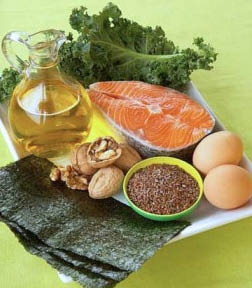
There are many types of omega 3 but the nutritional heavyweight title goes to DHA (docosohexanoic acid) and EPA (eicosapentanoic acid). These are derived almost exclusively from marine life (fish, fish oil, algae) and eggs.

Omega3Sources

There is another fancy omega 3 called ALA that we get from plant sources like flaxseed, olive oil, and walnuts but we only like it because it can be converted into DHA and EPA. Medical eggheads believe that DHA and EPA hold more nutritional punch, and as far as clinical research goes, they have a little more street credit. With that being said, if you’ve got some mouth-watering sources of ALA in your pantry don’t hesitate to tap that. Moving on…

What’s in a name?

So in reality there are about as many variations of fatty acids out there in the wild as Law & Order episodes. To distinguish between them the cool kids (scientists) describe them by the number of carbons they have and the location of the double bonds.
Remember that it’s the double bonds that make unsaturated fatty acids so kinky. The omega business is referring to the location of the first double bond that happens in the fatty acid chain, starting from the end (or omega) of the chain. So an “omega 3” fatty acid means that the first double bond is 3 carbons from the end of the fatty acid chain.

poly1

just remember to count 3 carbons from the end to the 1st double bond.

That’s it. No, don’t think any harder on that. No, look at me…let it go.

Omega 3 what have you done for me lately?

When a healthy level of omega 3 fatty acids are supplied from your diet they have the jedi ability to help lower our LDL cholesterol levels and help encourage higher, healthier HDL cholesterol levels in our blood stream. Now omega 3 has a more abstract role reducing inflammation throughout the body. Research has shown that DHA and EPA inhibit inflammation by suppressing inflammatory cytokines which are like cellular text messages that trigger cell responses.

What did inflammation ever do to us?

Well Inflammation is our body’s natural healing response when it comes to injury and infection. However, sometimes, not unlike a good friend (you know who you are), it can get a little out of hand. From an immunity stand point inflammation increases the fluid volume in the vessels and make blood vessel walls accessible for white cells to pass through in order to migrate to the source of an infection and kick ass. It also involves increased plasma flow allowing crucial proteins open access. This typically causes swelling, redness, heat, and in many cases, pain and discomfort. Fluid increases around the tissues and those tissues are surrounded by nerves usually. So as your tissues swell it pushes on the nerves and causes pain. This like many natural responses requires checks and balances. There are an [EXPLETIVE] ton of conditions involving chronic inflammation, a classic example being rheumatoid arthritis that tends to involve the small joints of the body.

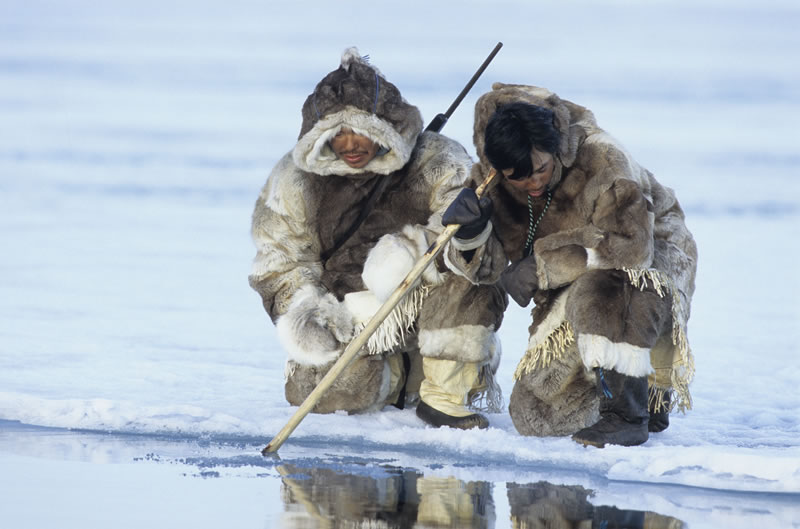
So when an infection or injury is resolved you would probably like the inflammation to mellow out. Some researchers believe that part of our body’s ability to keep inflammation in check is largely associated with a balance of omega 3 and omega 6 fatty acids. By “balance” of course they mean get more Omega 3 into the diet. I personally hate this kind of health debate with the white hot intensity of a thousand suns. Both omega 3 and 6 are essential to our diet and another group of researchers in the same FRIGGIN room will say that having to balance the two is shenanigans (technical term). So my advice is make like the Eskimos (Inuit to be polite) and just eat your oily fish! If you’re on the fence about any of it just stick to eating a diet lower in saturated fat and cholesterol which will help reduce your chances of heart disease no matter which way your omega door swings.

I hope this guides you in the right direction. Stay curious, stay classy, and never stop learning my friends.

inuit2

was going to make a joke about Inuits and fish but…what a beautiful culture. Oh well

Saturated Versus Unsaturated…Fight!!

Ok, it’s time to put on our grownup organic chemistry pants. Yes, I know they’re snug and just a little itchy, but to fully understand saturated and unsaturated fats you gotta get down on the molecular level. Are you ready to get down? That’s the spirit! I like your energy.

dork pants

Don’t tell me you don’t have chemistry pants. You’re 2000 and late!

What is fat besides something you pay a monthly gym membership fee to get rid of?

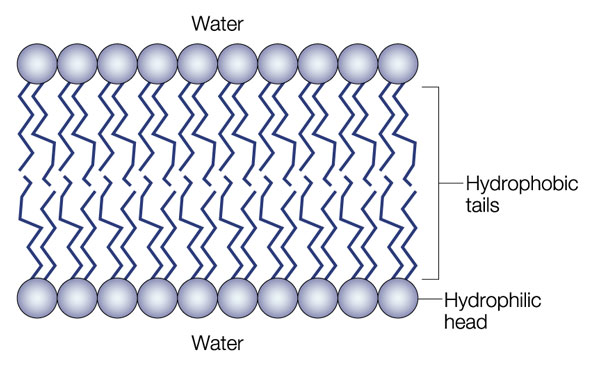
In order to keep that crazy dance called living going the body needs protein, vitamins, carbohydrates, and lipids. Huh, Lipids…? Let’s chat about molecules for a second. Lipids are a broad category of molecules to include cholesterols, phospholipids, and triglycerides. Your cholesterols can be supplied by your diet and tend to make up things like cell walls and some hormones. Don’t worry, I wrote another article about them. Phospholipids, like all lipids, have the curious property of being hydrophobic, a portion of the molecule refuses to mingle with water (haters are gonna hate) which creates a situation where long chains of phospholipids will form structures that contort and close in on each other to keep the water out. This makes the molecule ideal for forming things like cell membranes and vessicles.

membrane_f1

WARNING this content is rated “Mature”

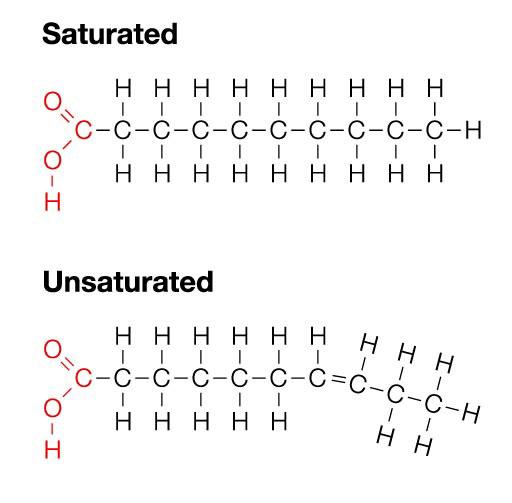
Now what we call fats are another name for that subgroup of lipids called triglycerides. They look
something like this…

triglyceride (1)

Do you see this madness up there? That’s a triglyceride (fat) molecule….well the atomic formula for one. It has a glycerol unit that connects 3 fatty acids like the handle to a 3 pronged Afro pick. Oh don’t turn your nose up to this diagram. This is where we need to play. You see all those happy little hydrogens? There’s something you need to know about the element carbon. It loves attention, how else do you explain an atom that can bond up to 4 atoms at once. It’s more high maintenance than a bitter, Hollywood Hills divorcée.

trophy wife

Carbon is cruel mistress

Carbon has a deep and real connection with Hydrogen and will give all of her time (bonds) to it but she will also bond with another Carbon if there’s a space left. She’s…um…adventurous. Anyway, when carbon and hydrogen are exclusive they like to form these really long chains that are structurally uniform. They look something like this…

triglyceride

eww gross, I hate chemistry. I can just feel this diagram mocking me.

When carbon has a space free (unsaturated) and or double bonds to another carbon it forms a kink in the chain and that structure changes the way that fat will now behave. Saturated fats contain chains of carbon bound exclusively to every available hydrogen. So they are “saturated” with hydrogens. Unsaturated fatty acid chains are a little friskier, molecularly speaking, and have kinks in the chain as a result of one or more missing hydrogen pairs.

lipid-molecule

now that’s kinky stuff

These structural changes affect the way the molecule behaves and it’s the behavior of molecules that we really care about. So how do they behave?

Well since saturated fats are so DANG uniform, the triglyceride molecules they form can stack on top of each other really well like Lincoln logs…oh wait, were you born after the 80’s? I mean they stack like Jinga blocks. So saturated fats tend to form solids at room temperature like butter, A.K.A the Golden God, or like the bacon fat you watched cool in the frying pan that one time and for a second you thought to yourself “is that what it’s doing in my arteries?” Yes, that’s exactly what it’s doing. You knew what you were doing, but you didn’t stop did you…DID YOU?!

Because unsaturated fats are so kinky (tee hee) they don’t stack as well and thus tend to remain fluid at room temperature. These are the olive, cannola, vegetable oils that are far better for your ticker (heart healthy). When they describe these fats as mono or polyunsaturated they are referring to whether or not there is one (mono) or more (poly) hydrogens missing from the fatty acids.

Trans fats (when fats attack)

Yeah, unsaturated fats are great and all but since they’re a little light on the hydrogens, stray elements like sulfur like to wander in every now and then and make those oils go rancid when left unattended. So they tend not to have a great shelf life and they don’t exactly spread or bake like butter. Trans fats happened because manufacturers partially hydrogenated (added hydrogens) to unsaturated fats. As a result, you can eat honey buns that have been in the vending machine since the Clinton Administration but they’re about as healthy for your heart as crude oil.

I hope that clears a few things up. Stay curious, stay classy, and never stop learning my friends 🙂

Muscle Mania

man that guy is swollen. What do you think...shellfish allergy?

man that guy is swollen..what do you think shellfish allergy?

If you ask some folks about muscle function they may start pointing and naming off the ones that they’re proud of and that’s if they haven’t already sent you pictures of their P90X abs in front of the bathroom mirror with their camera phone set to stun. If you’re like me, you’ll point to the ones you badly need to take to the shop (gym) for repair. However, we’re not here today to play pin the tail on the gluteus maximus. No my friends, in order to give muscle function the attention it deserves we need to get deep and real on the microscopic level..up close and very personal. Cue super hi-tech, magnified computer graphic model! Oh wait, I’m not actually funded. Well check out this boring 1970’s model below…just as good.

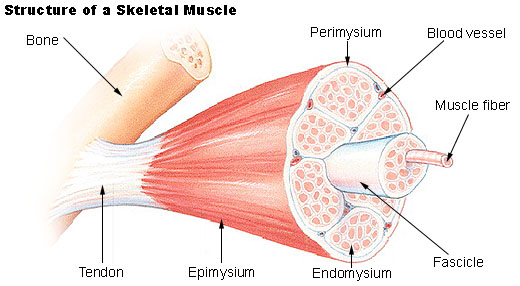
When I say “muscle” and I look at this diagram below, that looks not unlike a mattress box spring, my first thoughts are “what the hell is…” A single skeletal muscle is a lot like Kanye West, layered and complex. No worries, we’ll get back to this picture in a bit and hopefully it will make a lot more sense and if not well….maybe you shouldn’t put so much pressure on people. I mean do you have to stand so close?

protein structure inside filaments inside muscle cells...very lifelikesource:http://www.bio.miami.edu

protein structure inside filaments inside muscle cells…very lifelike
source:http://www.bio.miami.edu

3 main types of muscle

  1. skeletal – largely responsible for movement pushing, pulling, support and posture most of which is under the direct influence of our voluntary or conscious control and manipulation
  2. smooth – lines the walls of organs, aiding in the function of the esophagus, stomach, intestines, uterus, bladder, and blood vessels
  3. cardiac – which has a similar construction to skeletal muscle but functions involuntarily like smooth muscle

Anyway, muscles get their strength, flexibility, stability, and overall sex appeal from a mosaic of tiny working bits and pieces. Let’s have a look at them shall we…

The breakdown of a single skeletal muscle goes like this from largest to smallest

The BIG parts

Muscle (let’s say bisceps) composed of bundles of fascicles encased in a protective perimysium coat. Those fascicles are composed of bundles of muscle fibers (myocytes) which are cells encased in their own protective edomysium coat composed of collagen – by the way, collagen is one of the things people suffering from scurvy (vitamin C deficiency) have trouble making. Ok, that’s the last I’ll mention the gross anatomy because we need to get down to the business of the myocytes. That’s really where the action is.

Da Business

Individual muscle cells (myocytes if you’re nasty – Janet Jackson reference) are made up of myofibrils which are bundles of protein. Oh man, are you getting tired of bundles yet…when does it end? Never. Here’s where it get’s fun because now we’re on the cellular level and you know I like it when we get cellular. Muscle cells are composed of myofibrils each one is a curious jigsaw of proteins that slide past each other at specific, fine tuned junctions that collectively result in muscle contraction and relaxation. That’s right the deeper you go down the simpler everything is…just consider that at it’s core the source of a muscle’s movement is the sliding of proteins.

Those hero proteins

Actin – form thin filaments

Myosin – form thick filaments

and once more with feeling..source:http://www.bio.miami.edu

and once more with feeling..
source:http://www.bio.miami.edu

Powered by the cellular energy of ATP within short regions of the myofibril called sarcomeres, the myosin heads glide past the neighboring actin filaments. A collection of these filaments within myocytes responding to nerve impulses change the muscle’s shape and this is what does the work. What do you mean “am I just going to end it there?” Oh you just watch me. It’s true, physiologically and anatomically muscles have a great deal of complexity. If I’ve left you with more questions…if you suddenly feel a gap in your understanding, then my work here is done. Stay curious, stay classy, and never stop learning my friends 🙂