Medical Marvels – the Bayer facts (see what I did there)

Image

First a little history…

The story of Aspirin is an old one. I know you’re probably tired of

giving credit to the ancient Greeks for every little thing just

because they wrote everything down, but as early as 5th century B.C.

good folks like Hippocrates, in their flowing togas were describing

miracle pain relieving powders made from ground willow bark. Now let’s

fast-forward to the 18th century where scientist representing three

corners of the globe were playing around with salicin, as if it were

an Olympic sport. First a German named Johann Andreas Buchner

identified the compound salicin as the active ingredient to that wacky

Willow powder I mentioned earlier. Back in France, Henri Leroux was

figuring out ways to produce larger, biggie-sized quantities of the

compound. The cool kids (scientists) figured out along the way that

salicin gets it’s medicinal potency from being converted into

salicylic acid (its metabolite) by the body. Though this form can also

be found in plants a crafty Italian by the name of Raffaele Piria

would later figure out a way to convert salicin to salicylic acid in

his lab.

Turning down the volume….

I won’t bore you in this article with feedback mechanisms (I’ll bore

you in another article). Let’s just say that for many of the chemical

signals that our cells produce there is usually a mechanism to

interfere, inhibit, or amplify that signal. In the case of pain our

body really wants to get that message across loud and clear. There is

a family of cellular messengers called prostaglandins that, among other

things, switches our neurons on to pain. The enzyme cyclooxygenase

(COX-2) increases the production of these pain happy molecules during

inflammation. Salicylic acid blocks the expression of COX-2 (as in

it’s gene expression into protein). It’s kind of like throwing water

over the logs so the fire never gets a chance to start.

The trouble with Sally is…

Despite its magical pain relieving and anti-inflammatory properties,

salicylic acid could be pretty harsh on the stomach lining. In fact, a

lot of people suffered from intestinal bleeding after taking the

powder (Now that’s harsh). Along comes this hot-shot chemist out of

Germany, Felix Hoffman who decides that it’s the “acid” portion of

salicylic acid that’s the problem. After performing a little

biochemical black magic (Adding an acetyl group like acetyl chloride

to the compound to take the edge off a little) Felix produces a more

user friendly compound that his employer Friederick Bayer & Co would

later market as “the wonder drug.” When the biochemical nerd dust

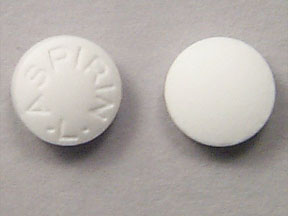
settled we were left with Acetylsalicylic acid (ASA), or Aspirin.

Stay curious, stay classy, and never stop learning my friends 🙂

Me Talk Pretty – Cross extensor reflex

That’s right party people we’re not done. You get two zesty physiology terms relating to the body’s response to pain for the price of one. Now that’s a value! Ok maybe I was just too lazy to include this one in our last brief chat about pain. I’m only human. Don’t make it awkward (I can feel you judging me and it’s so cold).

Well in addition to our lighting quick withdrawal from pain (NFR) orchestrated by sensory neurons, interneuron connections, and the spinal column, our body takes counter measures to maintain balance and stability. That’s right while one foot dodges sharp objects the other foot plants firmly on the ground to keep balance. Like the withdrawal reflex, this occurs within a fraction of a second as well. It is an opposing process. While flexor muscles on one side contract (for example hamstring muscles on the side of injury) the extensor muscles on the opposite side relax (quadriceps of the supporting leg relaxes to fully extend and support the weight). Once the pain receptors on the effected side are triggered by a pain stimulus (broken glass, sharp nail, etc) that signal flows down the sensory neuron like telephone wire to the spinal chord. From there the signal crosses over to the opposite side of the spinal chord to an excitatory interneuron. An alpha neuron takes it from there to its final destination, the neuromuscular junction controlling the extensor muscles in the opposite leg. This allows the weight to be evenly distributed to the support leg thereby taking pressure off of the injured side, minimizing further injury. I love a happy ending.

Stay curious, stay classy, and never stop learning my friends :-)

Me Talk Pretty – Nociceptive flexion reflex (NFR)

SU11_GTY_sb10064912a-001_a_hzKnown on the streets as the withdrawal reflex, NFR refers to our body’s involuntary, ninja-quick neuromuscular response to pain. It’s our super sexy physiology term of the week and quite possibly our spiciest one yet. I even like saying it out loud (sometimes in a French accent).

Isn’t it nice to know that our body has our best interests in mind despite our worst judgment? If you’ve ever not been paying attention for a moment and let your hand stray a little too close to a hot stove (like who hasn’t) then it’s highly likely that you’ve witnessed your NFR in action. You probably yanked your hand away at what felt like the same instant you experienced pain. We perceive pain and withdraw from it simultaneously and our body does this seamlessly. If you’re the least bit skeptical just think back to that scolding hot bowl of chili con queso you dropped. YOU didn’t drop it. Your hands let go of it.

What experience could be more direct than pain? In reality, pain may not be as direct a phenomenon as you might think. When it comes to our involuntary withdrawal from pain there are at least 3 stages that occur. Once any part of your body is injured nerves in the vicinity transform that moment into a lightning quick electro-chemical signal. That signal has to take a journey from the site of the injury to the spinal chord. A new signal is sent from the spinal column to the appropriate muscles to flex and manipulate that stray body part away from the pain stimulus. Perhaps one of the reasons this process is so blindingly fast is the fact that the nerve control center in this case is the spinal chord and not the brain.

Let me set the scene


It’s a perfect July afternoon. The grills are out. The air is saturated in honeysuckle flowers and spicy, charcoal kissed meat. You’re barefoot in the grass, loving life in your favorite shorts and a barbeque stained t-shirt. Oh yeah, you know what I’m talking about. You have a half-eaten bratwurst in one hand. Your other arm is free, innocently reaching out to grab the Frisbee that your friend just tossed to you (you crazy kids). She tossed it high. You take a step back unaware that laying in wait in the grass is a jagged piece of gravel just begging to be stepped on by bare feet. You plant your foot on the rock


1) Tiny, branching pain receptors suspended within the epidermal layer of your heel, like tree roots, transmit an electrical signal up a long network of neuron fibers that form an intricate junction at the spinal column not unlike a downtown D.C. intersection.

2) Once the message reaches the spinal column an alpha motor neuron sends a signal back down your leg.

3) The signal from the alpha motor neuron reaches a neuromuscular junction in the hamstrings of your leg, initiating their contraction. This flexes the knee, pulling your foot off of the ground to minimize damage to the soft tissue of your foot so you can frolic in the grass another day.

Stay curious, stay classy, and never stop learning my friends 🙂

Fun Facts – A Touch of Gray

ImageOh yes, it WILL happen to you. Don’t worry it happens to all of us, aging that is. More specifically, gray hairs happen. That’s right our bodies, unlike diamonds, aren’t forever. Hair follicles lose their pigment as we age. There is a family of pigments in our bodies called melanins that contribute to hair and skin coloration. So whether your complexion is Godiva, chocolate brown like Djimon Hounsou, salted caramel like Rosario Dawson (call me), or slow churned vanilla like Olivia Wilde, you have melanin to thank. Oh man, all this talk about race makes me want ice cream.

Anyway


Hair is like sea coral. Yes, that’s random
try to focus. Much of the underlying structure of a coral is the deposited, calcium carbonate remains of dead cells that harden and accumulate while new cells grow over top of the layers. The structural anatomy of a hair follicle is actually curiously complex but the portion of that follicle that we see protruding from the skin (the hair shaft) is just the deposited remains of dead keratinocytes (keratin containing cells). However, unlike coral, the living cells are underneath. Keratin is the crazy strong protein that gives hair, nails, and skin their structure and durability. That same protein that allows Scarlett Johansson’s golden locks to flutter in the wind are what make a rhino’s horns hard enough to dent the door of a Jeep when the tourists get too close.

Clusters of rapidly dividing keratinocytes at the root of the follicle team up to produce keratin. Cell division and keratin production creates a dense mass of material that builds from the bottom up. Meanwhile, bordering those feisty root cells are melanocytes that pass their melanin granules to the keratin producing cells. So even as the cells die they retain whatever color was passed on.

As we age melanocytes become less active and die off and so more and more hair shafts reach the surface without pigment. So just to be clear, your body doesn’t produce gray hairs. It simply stops producing melanin pigment within the hair follicles. The resulting hair strand is actually colorless.

Now the rate at which our hair loses its color is largely genetic. In know, genetics seem to be the new cop-out answer. It’s like when they use “instinct” to explain why ducks fly south for the winter. However, this time we have to point the finger at inheritance for our sexy, silver sheen.

Stay classy, stay curious, and never stop learning my friends :-)

Fun Facts – toxic

Ever wonder where our word “toxic” comes from? That’s OK if you haven’t…I mean, that’s why you have me. The word actually has its roots in ancient Greek mythology (like what doesn’t). The Greeks have a word, toxon, which can refer to the bow, the arrows, or both. In fact there is another word, toxicum, which literally means poison for arrows. Random right? Don’t judge the ancient Greeks.

As the myth goes that legendary stud, Hercules once slayed a giant, nine-headed sea serpent called the Hydra. You know how it is, you’re surfing a half pipe wave off the coast of Baja when a giant serpent tries to eat you and every time you chop one of its heads off they just grow right back. Anyway, Hercules was having similar drama that day. Long story short, he puts the smack down on this monster and dips his toxons (arrows) in the serpent’s poisonous blood. BAM!!! That’s where we get toxic. No no, thank you.

Stay curious, stay classy, and never stop learning my friends 😉

The Meninges and the Deadly â€œItis”

Your Meninges and You

"Whoah, play that back..whose heart is gonna stop?"

“Whoa, play that back…whose heart is gonna stop?”

It doesn’t seem fair about the brain does it
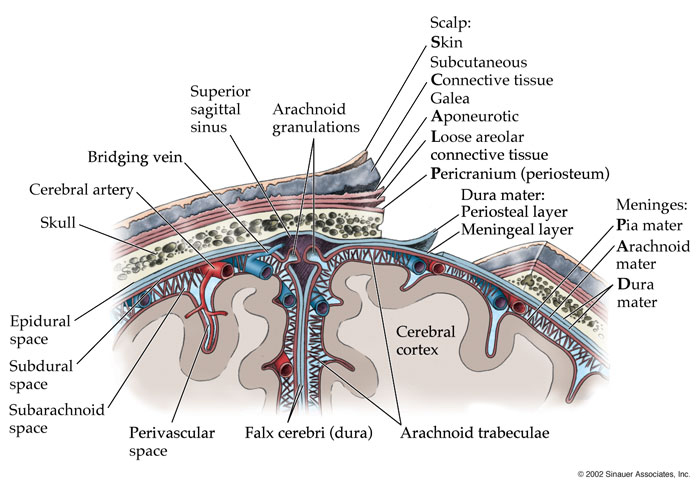
all the E-Hollywood, red carpet attention it gets? I mean there isn’t a single one of us out there in this crazy world that can survive if our heart stops beating and that’s just as true for snow leopards, crickets, Glen Beck, and 3-toed sloths as it is for foxy human-beings like you and me. However, the brain is treated like the commander and chief of the body (which it pretty much is). By that I mean consider the level of security and protection the body invests in its head of state. Not only is some of the densest sections of bone in the body (contained in the skull) there to protect it from impact like a souped up, Seattle Seahawks NFL helmet but there is layer upon layer of security measures in place to maintain this safe, warm, cozy, zen-like environment surrounding the brain and spinal chord as well. One of those layers of security is a super fancy barrier of connective tissue between the brain and skull referred to as the “meninges.”

Your meninges has 3 layers of its own, the dura mater, arachnoid mater, and subarachnoid space, which all kind of sound to me like strange galaxies of the Star Trek universe in old episodes of the Next Generation. (just saying, I’m a nerd like that)

Oh yeah, that's what I'm talking about.

Oh yeah, that’s what I’m talking about.

No, I’m not going to compare them to layers of a cake. We all know that’s really gross, but it is a fairly dynamic, intricate space. The Dura mater is the outermost layer. It’s thick, tough stuff just like you would imagine the outer layer of a barrier to be. Just beneath the dura is a single layer called the arachnoid mater that has thousands of spindly little projections that connect to the layer below, like scaffolding to a building under construction. The third layer is really more of a space, the subarachnoid space, that contains blood vessels, arachnoid spindles, and cerebrospinal fluid that basically coats the brain and spinal chord.

MeningesBlum

the subarachnoid space is a mesh of branching vasculature within a matrix of CSF fluid

Meningitis

Just like other tissues of the body the meninges is susceptible to infection and can become infiltrated by pathogens like bacteria, viral particles, or any other bad boy microbe within our circulation that makes it past our immune system or the blood brain barrier. When this happens the meninges becomes inflamed (e.g. Meningitis) and it’s about as bad news as bad news gets. Picture the meninges as a continuous inflatable mattress wrapped around the brain and spinal cord that suddenly gets blown up, squeezing and pressing on the delicate wiring of your central nervous system. Not exactly the best summer ever.

Hey, don't get distracted. I'm talking about meningitis here

Hey, don’t get distracted. I’m talking about meningitis here

Meningitis sufferers typically complain of a biggie-sized headache coupled with neck stiffness along with a fever. Other symptoms mimic that of a migraine
light sensitivity, confusion, disorientation, and a general sense of “something just ain’t right!” Now meningitis is an inflammatory process and you know that there are about a bazillion microbes out there that can trigger an inflammatory response upon infection. So when a patient, or even worse, when multiple patients display clinical features of meningitis the clock is ticking for medical detectives to seek out the “infectious agent.”

The Usual Suspects

N. meningitidis, pain in the butt, gram negative staining diplococci that looks like tiny coffee beans under the scope

N. meningitidis, pain in the butt, gram negative staining diplococci that looks like tiny coffee beans under the scope

When we want to point the finger at bacterial causes of Meningitis three misfits come to my mind almost immediately; Neisseria meningitidis aka meningococcus, Streptococcus pneumoniae aka pneumococcus, and Hemophilus influenzae. All three of these shady characters like to hang out in the nasopharynx of our upper respiratory tract. So they typically spread from infected individuals by means of “respiratory secretions” as in kissing, coughing, and sneezing. Of course, if the infected is an infant the mode of transmission can include just about anything they can put in their mouths and pass on. S. pneumoniae and H. influenzae are opportunistic little bastards. That means don’t go spraying everything and everyone down with lysol just yet, because these guys typically only spring into action when we are already immunocompromised in some way. Meningococcus, on the other hand, is the only known bacteria to cause meningitis on an epidemic level.

You may have noticed that I didn’t dive into viral causes of meningitis. Are you kidding..that list is like 3 pages long! Viruses pose an even greater threat in that they are much much smaller, mutate at the drop of a hat, and have more modes of transmission than…Lil Jon has bling.

Lil+Jon

Exactly, more than that.

A lumbar puncture is typically the diagnostic procedure of choice when meningitis is suspected. This undeniably scary, long needle is inserted into the patient’s back to extract Cerebrospinal fluid from the spinal canal, usually through access to the lumbar vertebrae. Remember that your brain and spinal chord are suspended in fluid 24/7 that should be vacant of things like, viruses, bacteria, and even your own blood cells. So those few precious drops of CSF are like diagnostic gold to the folks working the clinical lab. They will make microscope slides to look for white cells and microbe hitchhikers and perhaps most importantly culture that CSF sample on clean, nutrient rich agar plates to see what pathogens grow. Many times they can positively ID the culprit like a closed case file in an episode of “The First 48.”

Stay curious, stay classy, and never stop learning my friends 🙂

Me Talk Pretty-blood brain barrier

Hello! No, you look great today.

This week’s super sexy, fancy pants physiology term is…

Blood brain barrier

Every organ in your body is supplied in some fashion with blood. Yes, I know I haven’t said anything too shocking yet. However, as far as
the body is concerned the brain is like Queen Mother and requires the extracellular fluid (fluid without the cells) to be separated from the circulating whole blood by a royal guard of specialized endothelial cells. Just like I pointed out in another article, True Blood, blood is a pretty wild mixture and not everything in that mixture is useful or even safe for the precious, fine tuned neurons of the Central Nervous System (CNS). A network of painfully tiny capillaries form an intricate spider web mesh that filters out big nasty things (microscopically speaking) like bacterial cells, microscopic fungi, and cellular debris as well as large hydrophyllic molecules like proteins, and a buffet of potentially bad news chemical compounds.
The Blood Brain Barrier has the mad skills to allow vital compounds like CO2 and O2 to slip through while actively transporting (uses membrane protein channels) glucose, hormones, and amino acids. Remember that the blood vessels of the body have elastic qualities and those vessel walls become more permeable (leaky) during inflammation.
When doctor’s perform spinal taps, drawing up CSF (cerebrospinal fluid) from within the patients spinal column with a syringe, the
fluid tells a story. In healthy patients spinal fluid should be a ghost town…clear, colorless, and devoid of red cells, white cells, and just about everything else. Patients with active infections of their CNS may show white cells, red cells, increased protein, glucose (like in Tuberculosis cases) and discoloration of the fluid sample. The inflammation or infection in that case has overwhelmed the BBB’s ability to filter. Sometimes you truly understand the value of a thing when it stops working.

Stay curious, stay classy, and never stop learning my friends 🙂