Have You Thanked Your Cholesterol Lately?

“Good and Bad” cholesterol…really? In this age of information, high tech toys and fancy schmancy terminology is that the best that we can do? That’s like saying cats go meow or dogs go bow wow. I think we can stomach the truth [unintended pun]. There’s a little more to the story of cholesterol than making burger wrappers soggy or fueling Paula Deen’s “Ya’ll.” Stay tuned..

Your fat is lying to you..
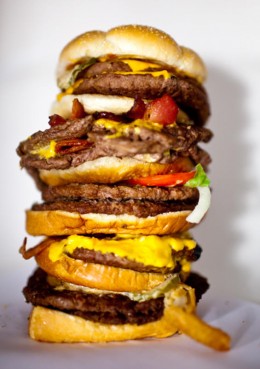
6409413_f260Even in this information age so many of us are still manipulated by what I call (as of 5 minutes ago) “catch phrase science.” We do love our misleading names don’t we. I would go so far as to say that in this country misnaming things is as much of a past time as football tailgate parties, apple pie, or reality television. You know what? We’re better than that my friends.

It seems to me that these days you can’t walk into a burger shack or put knife to margarine spread without some granola eating health nut clearing their throats about good and bad cholesterol. DISCLAIMER – [ I have only the deepest respect and admiration for granola eating health nuts and the overwhelmingly positive influence of their Kashi bar commercials.]

Evil Wizard Saruman inaccurately portrayed here plotting to enslave human race with trans fatssource:http://vegetanivel2.deviantart.com/art/Saruman-Final-213864892

Evil Wizard Saruman inaccurately portrayed here plotting to enslave human race with trans fats
source:http://vegetanivel2.deviantart.com/art/Saruman-Final-213864892

My friends, cholesterol is not a four letter word (literally or figuratively). It’s not the curse of an evil wizard as a means of killing off the hobbits. Cholesterol is a natural substance that our bodies use to construct cell membranes. The cholesterol component of the membrane is what contributes to the fluidity and permeability (allowing substances to pass freely in and out) of the cell. Scientifically speaking, if rhythm & blues had a molecular form it would probably look like cholesterol. We just so happen to have a couple trillion cells that make up our bodies that need to be replaced when they get destroyed or grow old and die like they are supposed to (not that I think everything old needs to die, unless it’s taking up a lot of space). So a small amount of cholesterol is necessary to keep our cells tap dancing and happy. Cholesterol is also one of the principle components of steroid hormones. Hormones work to regulate all manner of bodily function from metabolism to sexual maturity and reproduction which is also…fun.

When Cholesterols Attack….

So what’s with the “Good vs. Bad” cholesterol talk you ask? Excellent question, well done. You see our bodies use cholesterol but only in small amounts. What cholesterol we don’t need right then and there gets transported to the liver and is later broken down with the aid of bile and pancreatic lipase. The catch is that cholesterol doesn’t mix well with water. Blood is mostly water so anything being transported through the blood stream needs to be water soluble, and thus should dissolve in water. The molecular structure of cholesterol “ain’t havin that,” chemically speaking. So to solve this problem our bodies package those feisty cholesterol molecules with protein. What we’ve come to call good and bad cholesterol, HDL (high density lipoprotein) and LDL (low density lipoprotein) are actually protein carriers bound to cholesterol molecules. As long as we aren’t taking in too much cholesterol from our diet it’s all good (physiologically speaking). When we get carried away with our cholesterol intake the body needs to produce more carrier protein to move the fat about. These are the low density variety. They are larger and bulkier than their high density counterpart and have this nasty habit of collecting along the walls of blood vessels. This is where the “Bad cholesterol” thing comes into play. When these are allowed to build up, you get a kind of epic plumbing problem where the blood flow through those vessels gets restricted, increasing blood pressure. If that blood flow is completely blocked from fat build up then that could lead to a heart attack and I’m afraid I don’t have any jokes for those…bah dum bump.

Now your HDL (high density lipoprotein) or as I like to call it “the good stuff” is a whole different story. These carriers are smaller, denser, and actually help to remove cholesterol from the blood. We need both forms to function, but as is so often the case with the body, it’s all about maintaining balance among the two. The American Heart Association actually sets a value for that zen-like balance, recommending that we not let our HDL levels go below 40 mg/dl (routine blood tests will tell you that). Apparently letting our levels get this low in the blood prevents those mad skilled lipoproteins from being all they can be when it comes to protecting our hearts.

Well of course there is way more to this gentle art of lowering one’s cholesterol in order to live strong, kick ass, and swing dance another day but hey, you don’t need me to give you all the answers. In this crazy information age let your questions be your guide my fellow wisdom seekers. As for me, it’s bedtime. Until next time…

Just Breathe

What makes this wiseguy think he could possibly possess the wealth of knowledge to cover a subject as familiar, as fundamentally elemental as breathing? What nerve. What raw, untamed, audacity, arrogance…courage (please ladies, try to focus). Yeah, I’m kind of excited too. Let’s get into it!

I felt the same way when I lost my tiny car in the Disneyland parking lot.

I felt the same way when I lost my tiny car in the Disneyland parking lot.

Sorry, you won’t find some dusty ole “from the top” general biology review about the way in which terrestrial organisms evolved to tolerate and then utilize oxygen in their metabolism on here. Who has time for that? (that’s another article) No sir, we’re focusing this talk on human physiology. It’s all about us baby, the tool users, opposable thumbs waved high…USA! USA! USA! Sorry. Ok, so my grasp of comparative anatomy is severely limited but the nuts and bolts of the human respiratory system will just as easily huff, puff, and blow your mind.

The complexity of breathing is really a matter of what perspective you are looking at it from. It has an anatomical side, a fluid dynamics aspect, and a biochemical aspect. Well hell, let’s just chat about them all…just a little, so they (my science critics) can say that we tried 😛

A Word or Two about Biomechanics…

We move air in and out of our lungs by changing the shape of our diaphragm muscles which get their orders directly from the medulla oblongata of the brain (which is always fun to say). The muscles contract, pull air in like a dirt devil vacuum, and we inhale. When the muscles relax, or flatten and push air out like really ugly bag pipes, we exhale. That is breathing from a basic mechanical point of view, but I know that won’t satisfy you will it? Hellz to the no! Let’s talk about gas exchange.

Respect the Lungs

I know it's a creepy diagram but boy howdy do I love that sweater!

I know it’s a creepy diagram but boy howdy do I love that sweater!

What you should appreciate about the lungs as organs is the way in which they interact with the external environment. They are not only exposed to the air but are able to manipulate it in such a way as to allow the oxygen component of the air to diffuse into the bloodstream by way of the capillaries. To understand the diffusion of oxygen into the bloodstream you must visualize the way in which the airways leading to the lungs branch and articulate into smaller and smaller vessels. Our respiratory anatomy really reminds me of the root system of a cedar tree. From our mouths the air flows down our trachea (wind pipe), which splits at a fork in the road at our left and right lungs into two primary bronchi. The bronchi of each side (feeding each lung) spread out and branch until they can’t branch any further.

What Rhymes with Alveoli?

you'll find these handsome devils at the very ends of our bronchioles.

you’ll find these handsome devils at the very ends of our bronchioles.

If we took our hypothetical magnifying glass and looked at the inside of the lungs…got up close and personal at about 400 – 500x magnification, then we would be able to see the point where the bronchioles branch no further, the alveoli. These are tiny, no seriously, TINY sacs of tissue covered on all sides by blood rich capillaries. This is the site of gas exchange, where the vessels have branched down so thin that there is a single layer of red blood cells ready to accept molecular oxygen as it diffuses from the air space of each alveolar sac. Those red cells exchange CO2, bound to hemoglobin molecules, for that sweet sweet oxygen

Woody seen here taking questions after his lecture on respiratory pathophysiology

Woody seen here taking questions after his lecture on respiratory pathophysiology

The capillaries that transport deoxygenated blood to the alveoli are fed by the pulmonary arteries and the capillaries siphoning oxygenated blood away from the alveoli to the heart are fed by the pulmonary veins. The heart feeds the blood supply to the lungs and receives freshly oxygenated blood from the lungs to pump to the rest of the body. So it is certainly no coincidence that your heart and lungs are anatomical bunk mates with the left and right lung literally draped around the heart like a magician’s cape. Also, remember that we are not just bringing oxygen into our body but letting carbon dioxide (which can be thought of as spent air) out of our bodies. So you should have some appreciation at this point for how well our bodies do this “simple” task 24/7 without mixing the good air with the bad or as Woody from Toy Story would say “poisoning the water hole.”(honk if you like obscure Pixar references)

I could probably go on and on about the respiratory system and shifting oxygen dissociation curves but your eyes are probably glazing over about now and I’m missing a Burn Notice marathon. So stay classy my friends and never stop learning.

https://forgottenphysiology.wordpress.com/2013/02/24/the-zen-of-cardiac-blood-flow/

Mean Ole B

If for some reason you thought that the B complex referred to a psychological fear of Bee stings that make it impossible to cope, then you should probably read this article on vitamin B

the softer side of Vitamin B 

terrifying image of chihuahua moments before deadly fit of rage.
petsjubileebox.blogspot.org

I have to be honest with you. I’ve been avoiding the B vitamins like a rabid chihuahua (terrifying mental image). At first glance they are just a little intimidating, the nutritional deep end of the pool. However, I owe it to you, my fellow information seekers, to bring you the facts, raw and uncut. Today we are crashing this academic adult swim called the vitamin B complex. The shirts are coming off and we’re going full frontal in the name of science (metaphorically of course). Let’s get to it.

Let’s talk about absorption

Life is a day to day struggle. You can break your back just trying to fit in all the essential vitamins and nutrients your body needs in one day only to have to do it all over again the next and why is that? The answer is solubility my friends. Vitamins like C and the members of the B complex dissolve in water (water soluble) like so many spoonfuls of powdered, orange Tang. The advantage to this is that in small amounts they can be readily transported throughout the body. The downside is that like vitamin C, what we can’t use immediately will get excreted as waste rather than stored. So a fresh supply of B vitamins must be sought through our diets and via dietary supplements daily.

There are boat loads of chemically distinct B vitamins but we typically focus on eight. Hey, eight is plenty. Luckily, the B vitamins all play quite well together and are found, naturally in a lot of the same foods, which is why they were originally thought to be a single vitamin and have been grouped together in recent years.

and now a confession…

random assortment of grains and beans that capture the warrior spirit of the B complex

random assortment of grains and beans that capture the warrior spirit of the B complex

Ok here’s the thing, I’m really lazy. There is a small part of me that feels obligated to describe in great detail the amazing super powers of each B vitamin. The problem is that the B complex is all over the place. They maintain muscle control, nerve impulses, cellular metabolism, a healthy immune system, digestion, red and white blood cell production, hormone regulation, the construction of DNA molecules, and I wouldn’t be surprised if they somehow prevented dry, split ends. They have so many different applications that not only do I NOT care to memorize them all, but I doubt that you care to sift through a long, boring list of them. So this is me not listing them. My deepest apologies. Moving on…

All Star Players

vitamin B1 street name: Thiamine

vitamin B2 street name: Riboflavin

vitamin B3 street name: Niacin

vitamin B5 street name: Pantothenic acid

vitamin B6 street name: Pyridoxine

vitamin B7 street name: Biotin

vitamin B9 street name: Folic acid

vitamin B12 street name: Cobalamins

All roads lead to riboflavin

a small furry rodent...not to be confused with quinoa, the South American seed crop

a small furry rodent…not to be confused with quinoa, the South American seed crop

So where can you get your lipsmackin supply of B vitamins? I would be more than happy to break down each individual vitamin and tell you exactly which aile to steer your grocery cart down in the whole foods store, but you really don’t need to hunt down each one. Honestly, all you really need to do is EAT YOUR GRAINS. Yup, the bulk of these vital compounds can be acquired in robust amounts in foods that we love to avoid like oat bran, brown rice, BEANS (which house a ton of nutrients on their own), oatmeal, multigrain pastas, and quinoa, which always makes me think of a small furry rodent for some reason.

I will say that your B7 through B12s are a bit more abstract and not quite as abundant in plants. For these I might recommend looking either to the sea (fish, shellfish and the like) or let a little egg and dairy into your life.

When vitamins attack

6820213_f260Vitamins, not unlike teen celebrities, do not like to be ignored. Leaving out just one or two of your essential vitamins can lead to some pretty nasty consequences. In the case of pellagra, a serious vitamin B3 (niacin) deficiency, those consequences include skin lesions, madness, severe diarrhea, and death, neither of which can make for the best summer ever. Early Mesoamerican cultures like the Aztecs whose diets revolved mainly around corn, developed a method for processing their corn into ground meals with a mixture of wood ash and alkali that chemically unleashed the vital B vitamin. The Spanish conquistadors would later crash their tortilla party and swipe their corn but not their knowledge of processing it. This of course set up the conditions for a great deal of nutritional woe in the form of massive pellagra outbreaks in the years to come, not just for Spain, but all other cultures adopting the unprocessed corn as their staple food source. Hey don’t worry, they figured it out eventually and so did we. I just love happy endings 🙂