Secret Life of Vitamins

Why can't I get my tap water to do this?

Why can’t I get my tap water to do this?

That’s right, vitamins are more than just a passing fad like skinny jeans or ten minute workout DVD’s. Let’s strip away the pop star facade and go behind the music with these unsung heroes in this segment of “Forgotten Physiology”

Oh come on, you know you’re just a little curious about this topic. I’m willing to bet that you can’t go a day without hearing mention of vitamin C, vitamin D or both of these front page, poster child nutrients. Catchy, sexy phrases like fortified, enriched, and essential, tantalize us into reaching for 4 dollar cereal or that sleek, flashy carton of fresh squeezed, ruby red, cranberry, pomegranate plus tax super juice that moments after consumption leaves you just a little curious to know if “it’s” working. What does getting 120% of your total daily vitamin C at one time feel like Mr. Acai berry, however the hell you pronounce your fancy name? What’s the deal with vitamin D? How do our bodies manufacture it and does America’s mild addiction to Ben & Jerry’s help fill that insatiable calcium void? Let’s probe these and other vitamin mysteries shall we.

That’s C for can’t stop the groove…

Vitamin C is water soluble which basically means that the compound dissolves in water. This is also the reason why we have to replenish Vitamin C so often with our diet since whatever doesn’t get used by our bodys right then and there simply gets passed out through the urine. No, sadly it does not turn our pee the many colors of the rainbow like mystery flavor Koolaid (previously investigated in the name of science). The small amount of vitamin C that is utilized by our bodies certainly makes it count. Vitamin C is just another one of those fun essential components our bodies need that we don’t quite understand until we don’t have enough of it. Through various mystical biochemical pathways our body (as in our cells) utilize vitamin C, A.K.A ascorbic acid to synthesize a protein called collagen, a building block of connective tissue that basically holds us together…no literally. Collagen is in our skin, tendons, and even blood vessels – kind of a big deal

because when you say scurvy I think Johnny Depp

because when you say scurvy I think Johnny Depp

What happens if we don’t get enough vitamin C? The answer is Scurvy, my friends. That’s right, it’s more than just a fun word to say in a pirate’s voice. Scurvy, a severe form of vitamin C deficiency can lead to pale, spotty skin, fatigue, depression, and bleeding gums. It is essentially the breakdown of your connective tissue. Another common feature (as if that wasn’t sexy enough) are the presentation of wounds that are slow to heal. This could be largely connected with vitamin C’s role in immunity and as an antioxidant which protects the membranes of cells from oxidative stress. Oxidative stress occurs naturally in our bodies from the accumulation of free radicals, another name for stray electrons with no molecules to call home. It’s kind of the price we pay for having to breath oxygen. Eventually electrons from oxygen molecules stray from the herd and raise a little hell binding to molecules on the surfaces of our cell membranes and stripping them away. No worries though, the cool kids (scientists) just refer to this as “aging.” Yes, even you will age someday no matter how youthful and upbeat your facebook profile makes you look (making fun of myself there).

Vitamin C is also an important component of the immune system and is intimately tied to normal white cell function and proliferation…uh…somehow. It’s still a topic of current research so “da facts” are a little vague, sorry guys. Studies have shown that beefing up on vitamin C can promote a speedy recovery from colds.

Now a lot of animals can produce their own vitamin C. Sadly, we are not one of those animals, but hey, we are also the only mammals with grocery stores so….take that Mother Nature!

Oh yeah…and stay tuned for the follow up article about vitamin D..should be a good time.

stay classy my friends and never stop learning 🙂

Strep Poker

Don't you hate it when you have a sore throat and half of your face falls off? That's the worst.source:http://www.aurorahealthcare.org/yourhealth/healthgate/getcontent.asp?URLhealthgate=11535.html

Don’t you hate it when you have a sore throat and half of your face falls off? That’s the worst!
source:http://www.aurorahealthcare.org

Not unlike blizzards or public radio telethon week, sore throats happen. Sure, you can eat all the right things, get plenty of exercise, wear a hat when it’s cold, and dry your hair when it is wet, but the honest truth is that sore throats will still happen. Whether it was the 5 yr old at the bank who never covered his mouth when he coughed or the fact that you never washed your hands before leaving the birthday party at Chuck E. Cheese, as far as your immune system is concerned, it is only a matter of time before an infection sets in. Thankfully, a number of safe, easy, and reliable testing methods have been developed in recent years to aid clinicians in identifying these elusive, agents of infection and help patients arrive at a speedy recovery.

A Storm on The Horizon 

Morning is a cruel mistress

Morning is a cruel mistress

We can always feel it coming can’t we…that scratchy feeling in our throat, the dull twinge in our ears when we try to swallow. Oh yes, it’s sore throat time. Stayed out a little too late last night didn’t you? DIDN’T YOU?! Now just look what you did. That’s ok. Surprisingly, it is our body’s own immune response that produces the bulk of the drama when it comes to the really nasty cases of strep throat, especially in cases of neglected or under treated infections. Once the bacteria is recognized by our macrophages (the border patrol of our innate immunity) a cascade effect of cytokines, or cellular signals are released that bring about a variety of changes. Not only are white cells called to the site of the infection for a phagocytic schmackdown (when bacteria are either engulfed by macrophages or tagged by protective proteins for certain death by osmotic implosion), but inflammation is also induced by those white cells that are called to serve.

Blame those naughty antigens

The distinct molecular attributes of the streptococcus bacteria, or antigens, are largely to blame. The antigens (in this case, membrane bound proteins and carbohydrates that elicit an immune response) on the surface of the bacteria kick the immune system into overdrive, producing chemical cytokines or cellular signals that induce white blood cell action and inflammation (Phew…that’s technical!).This is what produces the characteristic soreness, swelling, and redness at the site of the infection. This not only makes swallowing difficult and painful but, lymph node glands can also begin to swell resulting in muscle ache in the neck. Fever and chills may also accompany the infection, as well as nausea and vomiting often in response to the persistent pain and discomfort. In the trade we like to refer to these as flu-like symptoms.

Sources of Infection

The bacteria can be spread from person to person by droplets from the cough or sneeze of an infected person. That’s right people, cover your pie holes! It is also possible to pick up the infection after touching contaminated surfaces like door handles or keyboards and then touching your eyes, nose, or mouth whereby the bacteria can easily gain access to the upper respiratory tract. Strep throat caused by S. pyogenes typically effects children or anyone with a weakened immune system. The infection can clear up on its own, however in some cases, S. pyogenes infections can lead to further complications, such as scarlet fever, toxic shock syndrome, and glomerular nephritis.

Behind the scenes

Typically when clinicians test for strep throat they are looking for the bacterium Streptococcus pyogenes. That is not to say that other bacteria as well as viruses are not just as capable of causing upper respiratory infections, but when it comes to the characteristically red, inflamed sore throats, in this region of the world anyway, it is S. pyogenes that usually gets called in for questioning. It is a handsome, frisky Group A, Beta-hemolytic strain of bead like bacteria that can produce mild to aggressive infections. “Beta hemolytic” refers to the ability of the bacteria to completely rupture (lyse) red cells on a culture plate, demonstrating a distinct, clear zone of red cell destruction. If you were to hold up an agar plate to the light it looks like someone took their thumb and rubbed the gel away where the Strep had been growing. Just think about the kind of damage something like that can do in your throat…ewww. That zone of hemolysis is a diagnostically reliable behavior that lab folks use to pick our star bad boy out of the line up.

Blinded by Science – Testing Principle

I hear lipstick models have really bad eyesight

I hear lipstick models have really bad eyesight

There is a bargain bin of strep testing kits out there in the biotechnology market. They all tend to work off the same testing principle of immunofixation whereby a sought after antigen (in this case the S. pyogenes membrane bound carbohydrate) is bound to specific antibodies within the testing media. There is also a color indicator in the mix that forms a unique complex which displays the presence of that antigen. The color change is then interpreted as a positive result. It is way less dramatic and not nearly as fun as mystery flavor koolaide. These tests are limited by sensitivity, meaning that an individual can in fact have a Strep infection that is below the detectable limits of the test. This is why it is a good practice for the physician to order a follow up culture for negative rapid strep screens.

Penicillin to the rescue!

As mean as sore throat infections can be they are often easily treatable. If they do not clear up quickly enough on their own we can typically zap them with antibiotics in the form of our favorite cell wall attacking antibiotics like penicillin, amoxicillin, or any taster’s choice cephalosporin on the market. Just be sure to take your full prescribed dose. Those microbes are sneaky and like to play dead. Under treating an infection is the perfect real world example of “what does not kill us, makes us stronger” except in this case it’s the Strep that can come back stronger. Of course, antibiotic resistance will have to wait for another article.

Stay classy my friends and never stop learning.

Kidney Confidential

Just couldn't help myself..you know how it is. Magically Yours, Forgotten Physiology :)

Just couldn’t help myself..you know how it is. Magically Yours, Forgotten Physiology 🙂

Surprising isn’t it, that we’ve never talked about the kidneys until now. Well sure there were a few times that I might have mentioned them in other articles, but kidneys should never play supporting roles. We’re not talking Mary Kate and Ashley. No sir, the kidneys are Siegfried and Roy, center stage in Vegas with white tigers jumping through rings of fire.They deserve the full, Maxim magazine centerfold treatment.

The Low Down
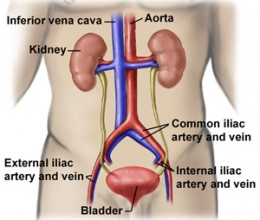
CRAZY SIMPLIFIED - aorta branches to feed kidneys blood which do their filter thing, make the pee which drains through ureters and empties into bladder. Nothin but net!

CRAZY SIMPLIFIED – aorta branches to feed kidneys blood which do their filter thing, make the pee which drains through ureters and empties into bladder. Nothin but net!

Let me level with you for a minute. Urine…it’s nothing to be afraid of. It is the ultra filtrate of blood plasma. “Pee” is the result of a highly specialized filtration system, the kidneys, receiving a rich blood supply from the abdominal aorta. They selflessly separate the good stuff from the bad and send the filtered blood, squeaky clean to the vital organs. What waste products are left over leave the body as urine. A large component of urine is urea which is a substance representing the end of nitrogen metabolism. It’s actually odorless but when the stuff comes into contact with water or water vapor we get ammonia from the reaction which definitely has its own pungent, sweaty gym sock charm. So If I were ever tempted to give you the cliff notes summary of what the kidneys do I would say that they remove soluble waste or excess metabolic byproducts from the blood by concentrating them into urine.

No Dude, Seriously….

Friends don't let friends forget about renal blood flow.

Friends don’t let friends forget about renal blood flow.

When serious people talk seriously about kidney function they DARN well better know that they need to mention filtration, reabsorption, and secretion. Otherwise they’re just wasting time, air, and parking space. So let’s do this thing right.

Filtration

The show kicks off with the renal artery which, branching off of the abdominal aorta, supplies blood to the whole operation (the kidneys). Like all fashionable arteries it branches into smaller vessels. STOP

[This is where we enter the microscopic neighborhood of the nephrons, the thousands of tiny functional units that make up the plumbing and wiring of the kidneys. Surprisingly, what does the work of each kidney is the collaborative effort of thousands of tiny nephrons. Your key words are: Tiny and Thousands. Please, please keep this in mind because these itty bitty nephrons perform some major league physiology. Ok back to the show.]

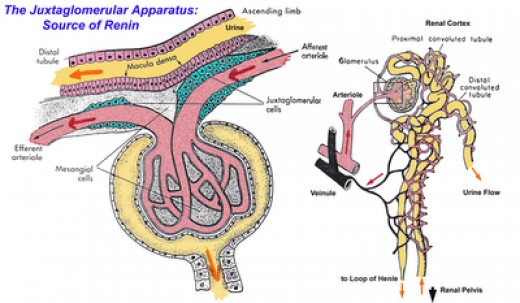
Those arteries having branched until they can’t branch any more now make up the afferent and efferent arterioles. These form a kind of yarn ball of capillaries called the glomerulus. The glomerulus forms such a fine mesh of blood vessels that not only are blood cells separated out of the blood but just about any substance exceeding a particular molecular weight to include most plasma proteins. Only things like water, sodium, the occasional glucose, and something called urea are all that slip through the gate and slide down the drain. Now that’s IF everything is working properly. This mesh of capillaries sits in a receptacle formed of cells called the Bowman’s capsule, which is kind of like the bowl basin of the sink.

The afferent arteriole sends blood to the glomerulus while the efferent arteriole carries blood away from the glomerulus and articulates into the peritubular capillaries that are going to surround the tubular portion of the nephron where they will play a super fun role in tubular reabsorption.
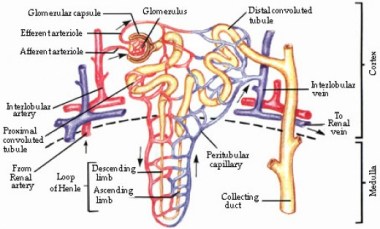
nice diagram right...took some serious google image surfing for this baby. Oh how the muscles burned!

nice diagram right…took some serious google image surfing for this baby. Oh how the muscles burned!

Tubular Reabsorption

Ok so blood has passed, Brita filter like, through the gates of the glomerulus, but that was a nonspecific filter. Now we’ve entered the world of reabsorption which is way selective. To put this into perspective we’ve gone from the freckled, learners permit sporting, ticket stub tearer at the movie theater to the veteran TSA agent with white gloves, only 4hours of sleep, and an itchy trigger finger. When it comes to letting substances back into the blood post filtration, the body takes ONLY what the body needs (sodium, potassium, chloride, bicarbonate, glucose) any access gets the royal flush (secretion). When it comes to things like sodium there’s a combined effort between crazy natural forces like passive diffusion via osmosis and whatever mood our adrenal cortex is in. Let’s say it’s Monday afternoon and the body says “man, I sure could go for some more sodium.” So your adrenal cortex will secrete aldosterone which is like a chemical text message that directs the cells of the proximal convoluted tubule to absorb more sodium.

[Substances reabsorbed by PCT(proximal convoluted tubule) – sodium, potassium, water, urea, glucose, chloride]

The reabsorption of water is completely dependent on sodium reabsorption. This is where the whole osmosis thing comes into play because water is naturally going follow the flow of sodium ions, moving in the direction of higher concentrations, Tai Chi like to restore osmotic balance. Now of course, increasing water in the vessels (fluid volume) increases blood pressure. So if A+B=C then increasing sodium reabsorption increases blood pressure.

A change in blood pressure is sensed by the cells of the juxtaglomerular apparatus (another portion of the nephron) which secretes renin. Renin converts the protein angiotensinogen into…wait for it…angiotensin. This is the substance that signals the adrenal cortex to do its aldo thing in the first place. Sounds like one of them crazy feedback loops to me (another article I promise).

Thirst

Yes, your mind does play tricks on you. There is this clever thing that your hypothalamus does in response to high sodium concentrations in the blood. It tells you to drink more water. Meanwhile, it signals your pituitary to secrete ADH (antidiuretic hormone) which tells your distal convoluted tubule to reabsorb mas agua as well (my hypothalamus is bilingual BTW) rather than just dump it down the drain (excrete in urine).

the juxtaglomerular-whatchamacallit is a collection of cells in the neighborhood of the glomerulus

the juxtaglomerular-whatchamacallit is a collection of cells in the neighborhood of the glomerulus

Loop of Henle

Best summer ever!

Best summer ever!

No, it’s not a 700ft water slide where they take your picture as you plummet half naked on a large rubber inner tube. It is the section of the nephron leading from the proximal convoluted tubule to the distal convoluted tubule and it represents some pretty badass architecture so show some respect! It is the sinking, looping construction of the Loop of Henle that allows urine to concentrate sodium, potassium, and chloride ions via a concentration gradient which allows water and valuable ions to be reabsorbed. This however, should be an article all to itself so..you may want to give this the Wiki treatment.

Secretion – Last Call

Ok so we came, we partied, we danced all night, and now the kidneys are saying “everybody out!” This is where the body rids itself of all those high and low molecular weight substances that got the reabsorption shaft (excess H2O, sodium, and urea/nitrogenous wastes).

Now you are probably saying “whoa now, there are way more substances that end up in urine after reabsorption.” Ok, there is a threshold that the kidneys reach. For example they reach a maximum capacity for how much glucose they can filter at one time and yep, the stuff slips through the glomerulus and if that concentration is high enough then the loop of Henle just doesn’t have the molecular horse power (energy) to pump glucose back into the blood.

And the moral of the story is….

Blood enters the kidneys to be maticulously filtered by thousands of microscopic, fancy pants structures called nephrons which filter soluble and insoluble substances from the blood, reabsorb vital substances like sodium, water, and glucose depending on the body’s need for it, and secrete excess waste by concentrating it into urine which flows through the ureters and empties into the bladder for the royal flush.

What’s that…you say there’s more to it than that? You bet your efferent arterioles there’s more, but for now stay classy, stay curious, and never stop learning my friends 🙂

The Liver Files

Ok, so I thought she had pretty eyes. Don't judge.

Ok, so I thought she had pretty eyes. Don’t judge.

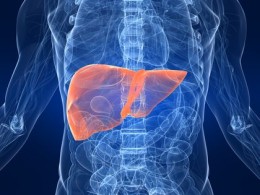
I mean frankly, the liver performs so many necessary functions that it’s almost boring. The liver is like that movie in the Oscars that wins every award…best screen play, best performance, best soundtrack…and you’re like “come on, give someone else a little credit.” Well when it comes to the body the liver deserves all the credit. For starters the people who write textbooks can’t even decide what organ system to put the liver in. It produces enzymes that are necessary for the emulsion of fat, and the metabolism of proteins and carbohydrates so obviously it’s part of the digestive system…well kinda. It has a hefty blood supply, produces lymph, and harbors antibodies for the destruction and removal of old and ineffective red cells so maybe it’s part of the immune system…well kinda. It produces an [EXPLETIVE] load of useful proteins that aid in everything from helping your blood to clot to detoxifying drugs, and toxins that enter the blood stream so….don’t look at me, your guess is as good as mine. If you want a meeting with the Liver you’ve got to ride the elevator to the top floor, follow the arrows to the door labelled “The Man” and wait in line. Well ok, this stays between me and you, but I can tell you what I know. Keep your voice down and close the door behind you…

Is it just me or does the invisible man have great biceps?

Is it just me or does the invisible man have great biceps?

The Liver is the original Renaissance man. I mean forget the Dos Equis commercials. Just take a look at this organ’s resume..

Metabolism

glycogen synthesis and degradation, gluconeogenesis from protein, amino acid, and lipid / non-carbohydrate sources

Toxicology

drug metabolism and detoxification

Digestion

synthesis of bile salts…nasty but necessary

Synthesis

plasma proteins, cholesterol and its carrier lipoproteins

And I wouldn’t be suprised if it knows magic tricks

Digestion and Metabolism

The liver produces bile which looks a lot like it sounds, nasty, but it gets stored in the gallbladder to aid in the breakdown of lipids (fats basically) in the small intestine.

About that whole bile thing…

bile facilitates the action of pancreatic amylase which actually degrades triglycerides. The bile’s salts have two sides, molecularly speaking, hydrophobic and hydrophyllic. The main reason why fats don’t dissolve in water is because their molecular surface repells water. So bile salts can surround fats with their water loving (hydrophillic) sides out which gives enzymes like pancreatic amylase the back stage pass.

Synthesis

So not only does the Liver make cholesterol but it produces the carrier molecules, lipoproteins like HDL and LDL that transport the stuff. Cholesterols are insoluble in water so the lipoproteins facilitate their deep sea journey through the bloodstream.

Some light anatomy

so the main cellular component of the liver is the hepatocyte. They make up roughly 70-80% of the total mass so naturally, because I do choose favorites, that’s what I’m focusing on in this article. They are the working parts of the organ that together make the magic happen. An organ is the sum of it’s parts…microscopic processes equating to bigtime changes. Ah yes, and it get’s it’s hefty blood supply from the hepatic arteries and portal vein. Now you know in case Jay Leno asks you in the street. You’re welcome.

Da Sugar

When I say metabolism I want you to think “what happens to the glucose?” Let’s say it’s half priced Tuesday at The Gringo Burger Bodega (I made that name up. Can you tell?) and you’ve treated yourself to the #6 diablo fries with a dulce shake made extra dulce. While being transported to takeout heaven you wonder “What is my body doing with that access glucose?” You’re always thinking. I love that!

Here’s what happens…

Blood from your portal vein supplies your hepatocytes with fresh glucose. Those cells will form long chains of the glucose molecules linked by a-1,4 glycosidic bonds to form this nice biggie sized storage form of energy called glycogen which happens when your blood glucose levels are high hence there is a raise in blood sugar so having all those hepatocytes uptake glucose lowers blood sugar. So in classic, clever physiology fashion when blood sugar is low the glycogen can be broken down/degraded into glucose which is then available to adjust for blood glucose level.

Gluconeogenesis

Another neat trick…

another innocent victim clearly possessed by 10k demons

another innocent victim clearly possessed by 10k demons

The other thing you have to know about the liver is that it doesn’t like to let anything go to waste. If it’s an organic molecule and your body can make use of it, chances are your liver is breaking it down and recycling it as we speak…no seriously, like just now. oh you missed it.

Sometimes carbohydrates just aren’t enough. Sorry blue box mac n cheese, I know we go way back but it’s true. The body needs a way to derive glucose, that oh so sexy cellular currency, from non-carbohydrate sources. The process by which the liver pulls this off is of course referred to by the cool kids (scientists) as gluconeogenesis. Your kidneys can also pull this off, but don’t get too excited about this clever trick. It’s just another way the body compensates for potentially “bad news” drops in blood glucose apart from the breakdown of glycogen. It’s the kinda thing that is supposed to kick in when you’ve been fasting, starving, or exercising like you’ve been possessed by demons.

Detox Rocks! (see what I did there)

So one more thing…

hell yeah

hell yeah

The liver is probably the best defense our body has to protect us from ourselves. If it’s toxic or in a form the body can’t use…the liver will convert, breakdown, and package it like there’s no tomorrow..because if it didn’t there really would be no tomorrow. This is typically referred to as xenobiotic metabolism and it’s made possible by the bountiful community of enzymes and their biochemical pathways that call the liver home. The liver typically accomplishes this by modifying the fat loving (lipophilic) nature of many pharmaceuticals into a more user friendly and excretion friendly, water loving (hydrophilic) form. However, it’s not always about solubility. Some nasty little substances require a little versatility (I’m looking at you Alcohol..you know what you did last weekend). Thankfully our livers come equipped with a nifty alcohol dehydrogenase that allows for the reduction reactions that keep this party animal in its cage reasonably well.

I should mention however that the liver’s gift can also be its curse. The liver has such mad skillz for the bio-conversion of compounds that every now and then it can convert foreign compounds into substances that are actually more toxic than what you started with. We call these metabolites and they are no fun.

Well my friends it’s time for me to go make a difference (eat dinner). Stay curious, stay classy, and as always never stop learning 🙂

Spleen for All Seasons

"Yup, I'm old and mysterious and I could tell you stories that'll make you sleep with the lights on."

“Yup, I’m old and mysterious and I could tell you stories that’ll make you sleep with the lights on.”

Oh yes, this is one sketchy organ. The spleen is the epitome of the mysterious old man the townsfolk all whisper about. No one really knows his story accept that he’s always lived in this town (our bodies). As far as organs go, the spleen hardly ever shows up on the 6 o’clock news. Most of us don’t know what it looks like, where it’s located, if it votes republican, democrat, or green party.

The spleen is one of those organs that helped us survive in the womb. When we are born and just fresh out of the wrapper like a snappy, hard pretzel our bodies were still adjusting to an oxygen rich environment. While we were still hitching a ride in Mommy Dearest our bones were still developing and not quite ready for the full time responsibility of being the primary producers of our blood cells (whites and reds). In the early stages of development our liver and spleen jump start us with all the oxygen supplying cells we need. As you develop, your organs pass the baton of blood cell production, or hematopoeisis, until this process is effectively carried out by the bone marrow. What a lot of folks don’t realize is that the spleen never stops looking after those red cells, in fact the spleen receives it’s own blood supply to act as blood filter extraordinaire. The spleen is an incredibly attentive, highly adapted filter to be more exact. Just calling it a filter is like saying the Iron Chef makes a mean peanut butter & jelly sandwich or that Yanni plays a mean chop sticks (which I’m sure he does). The liver receives a much larger blood supply and carries out more of the blood cleanup but the spleen is considerably more meticulous.

Ah, now why can't anatomy be this cut and dry all the time?

Ah, now why can’t anatomy be this cut and dry all the time?

The spleen can selectively remove the misshaped or malformed cells from circulation. To a red cell, shape and form is everything. They have to be firm and flexible to squeeze through vessels without leaking their precious hemoglobin payload. The spleen acts as a final physical exam for new reds entering the bloodstream. It squeezes them through tight fitting vessels and has it’s very own elite team of white cells to pick off trash along the red cell membranes(precipitated proteins or remnants of DNA), changing their shape, roughing them up. Cells that make it to the other side have essentially proven themselves worthy to deliver oxygen another day.

The spleen also acts as a kind of lymph node whereby a population of B and T cells reside to take part in the immune response. It has so many macrophages scouting the blood for trash that we typically classify the spleen as a lymphoid organ. It also houses a backup supply of blood for the body to compensate for blood loss.

So ok… yes, when someone has to have an enlarged or infected spleen removed (splenectomy) they can live a perfectly normal, healthy life without it. They are susceptible to a few more infections (especially the very young), but considering that they are an organ light they do pretty well in most cases.

This is my problem..I really don’t like referring to the spleen as an accessory organ or dispensable based only on the fact that we don’t die when we get them removed. I mean if science only considered something important based on whether or not something bad happened to us if it was gone then we would get nowhere as a civilization. So let me just say that perhaps the full functionality of the spleen is yet to be realized. Once upon a time someone said “there must be something in the air too tiny to see that can cause disease.” Science has always been wide open baby. Stay classy my friends and never stop learning.

Adrenal Gland Greatest Hits

I think it’s safe to say that the average American knows way more about the dating habits of Snookie than the basic functions of their own adrenal glands. My fellow Americans let’s beat the statistics shall we.

6198582_f260

Jessica Biel – personal favorite tight leather sporting supporting actress

You know all this talk about adrenaline bores me to tears. Anytime anyone talks about the adrenal glands all you hear about is the “fight or flight” response. It’s like the preview to a summer blockbuster where all they show are the explosions and 15 seconds of car chases with tight leather wearing supporting actresses in the passenger seat (which I don’t mind so much). If anyone asked you what the movie is actually about, good luck. There is however, way more to this E-hollywood bad boy than running from a fight. He does the work. So right here and now we’re going to attempt to answer the question “Adrenal Cortex, what have you done for me lately?”

Anatomy 101

Your adrenal glands rest atop the kidneys like really ugly shoulder pads, secreting hormones into the bloodstream in response to stress. Anatomically speaking we’ve designated the adrenal gland into two distinct regions, the cortex and the medulla. The cortex (forming the exterior portion of the gland) is largely known for producing cortisol and aldosterone. The medulla (forming the center or guts of the gland) specializes in producing epinephrine and norepinephrine (one of the most notoriosly misleading names in physiology).

Fun fact – both epinephrine and norepinephrine contribute to the fight or flight response with a few subtle differences. So if you’ve been thinking this whole time that they were highschool rivals or that norepinephrine was Latin for “not friends with epinephrine” I promise that I won’t tell anyone…fingers crossed.

Also, why is it that the term cortex, which sounds a lot like “core” actually refers to the outside of the organ? Sorry, that just irritates me to no end.

Pop Culture

it happens all the time….one day a band makes it big, working their way to the top of the charts, but the next week it’s the lead guitarist who’s on the cover of Rolling Stone’s magazine. Whenever people talk about the human stress response to danger or exhiliration we tend to focus on the adrenal medulla, the site of epinephrine production A.K.A adrenaline. However, this is merely responsible for a short term response to stress…the increased heart rate, breathing rate, and rapid conversion of nutrients for the sudden burst of muscle action. We’ve forgotten all about the long term response to stress largely coordinated by the adrenal cortex, the electric bass player who never stopped setting the tempo.

Adrenal Cortex, boy you so crazy…

We like to talk about the big picture but the truth is that so many of our physiological responses begin with baby steps, minutia, small subtle changes that lead up to bigger, longer lasting events. If you want to affect an organ there is no secret doorbell with a note that says “push ringer to call the kidney.” Hormones like aldosterone act on the cellular level, and “talk” to the tiny functional units of the kidney.
One such hormone, aldosterone, produced by the zona glomerulosa of the adrenal cortex works on the distal convoluted tubule and collecting duct of the nephrons (tiny fuctional units of the kidneys) to increase the reabsorption of sodium from the plasma which in turn affects the water balance. Why do we care? This ultimately effects blood pressure. Your blood is more than 50% water (i.e. plasma) so since water makes up such a significant volume of the blood, influencing the salt/water concentration effects overall blood pressure. This again helps us to maintain metabolic balance.
Aldosterone production is triggered both by ACTH (adrenocorticortropic hormone) from our good friend the pituitary and angiotensin triggered by the juxtaglomerular cells (in the kidneys) when renal blood pressure drops (blood filtered through the kidneys).
Another fun trick the adrenal cortex has up its sleave is the production of cortisol. In response to prolonged stress. Cortisol is chiefly responsible for increasing blood glucose over time through glyconeogenesis, which is basically a means of utilizing non-carbohydrate sources such as lipids and amino acids to form glucose. This is just another way our bodies maintain homeostasis, that amazing zen-like balance of our metabolic needs. Cortisol also suppresses the immune system. This makes it quite useful in medicine as an effective anti-inflammatory agent.

It’s human nature…we like to compare things. That’s just how we roll and every now and then it helps us learn so….

Adrenal Medulla V.s. Adrenal Cortex

medulla – the production of epinephrine & norepinephrine – “Fight or flight” car chases, explosions, tight leather pants

cortex – the production of aldosterone & cortisol – homeostasis, zen-like balance, long term response to stress

Endocrine Parte dos

Apparently not even the invisible man can hide his trachea

Apparently not even the invisible man can hide his trachea

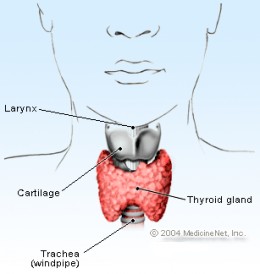
Metabolism – the way our bodies produce and utilize energy on a cell to cell basis to keep us alive to jazzercize another day is largely regulated by a funky looking, butterfly shaped, hormone secreting gland we affectionately call the thyroid.

Alright people let’s talk about the details…

It would be nice if all we needed to know about the thyroid was that it produces thyroid hormone. Yes, but you’ll never reach academic rock stardom that way so…

What we refer to as thyroid hormone is actually describing two different forms of one hormone, the active and inactive state. Iodine is a principle component of the molecule and the properties of the hormone are greatly altered by the number and arrangement of its iodine molecules. In fact, if you have a severe enough iodine deficiency in your diet you can develop an enlarged thyroid gland called a goiter, which is probably the worst looking hickie you could get without the makeout party ( I wouldn’t know).
When T4 (thyroxine) is secreted by the thyroid gland it circulates through the bloodstream inactive until it can be deiodinized and converted into its active form, T3(triiodothyronine).
Now the hormone is primed and ready to mingle, binding to cell nuclear receptors, initiating RNA transcription, protein synthesis, and kicking ass all over the place, driving our cells to burn energy, oxygen, and be all they can be.
All of this T4/T3 magic is of course made possible by our friend the pituitary gland which produces the trophic hormone TSH (thyroid stimulating hormone) which triggers the production of throid hormone by the thyroid.
In addition to increased metabolism, thyroid hormone also raises the heart rate and respiration. If we are talking about the human engine here, an increase in respiration draws in more oxygen which our bodies utilize to burn more calories. This hormone also triggers the breakdown of glycogen stores in our cells (glycogenolysis) which releases glucose back into the bloodstream making it readily available for energy.

But wait there’s more…

Parathyroid hormone (PTH) and the opposing action of Calcitonin

We’ve only discussed half of this magic butterfly’s mad skillz. There is yet another hormone produced by the thyroid that we affectionately call calcitonin which, along with parathyroid hormone from theparathryroid glands, regulates calcium levels in the blood. HOw? Excellent question…
Your parathyroid glands rest behind the thyroid, and while not getting their hands dirty with metabolic regulation, they are largely responsible for the regulation of calcium levels in the body…which is kind of a big deal.

Our bones are the largest source and sink for calcium in our bodies. So when the pressure is on to get calcium circulating in the blood again our bones play an award winning, supporting role. There are these crazy cells called osteoclasts which are basically differentiated macrophages (white cells of the bone marrow) that specialize in degrading bone. This is regulated largely by the opposing actions of parathyroid hormone and calcitonin.
When more calcium is needed in the blood PTH indirectly stimulates the formation of new osteoclasts from macrophage precursors which degrade bone minerals with the use of acid from their cellular stomachs, lysozymes. How cool is that? (feel free to say “very cool”). The role of PTH is indirect because in its absence osteoclast formation would normally be inhibited. PTH basically plays matchmaker, stimulating osteoblasts (cellular precursor) to produce stimulating factors and express certain membrane receptors. When macrophages come under the influence of these factors (and the mood is right) they differentiate into osteoclasts.

*sigh...doesn't it make you tear up with after school nostalgia?

*sigh…doesn’t it make you tear up with after school nostalgia?

These cells differentiate when chemical signals activate their membrane receptors to trigger a physical change within the cell. It’s kind of like when Tommy morphs into the white ranger whenever Zordon calls him on his gigantic 90’s cell phone (do my Power Ranger’s references turn you on ladies?Please, try to focus). When blood calcium levels are just right or too high calcitonin is released, which inhibits the action of those osteoclasts on the bone and basically tells them “nada mas.” This allows for the calcium to be reabsorbed by the bone, reducing the levels of Ca2 in the blood. Calcitonin also inhibits calcium absorption by the intestines as well as the resorption of calcium by the nephrons (tiny functional units of the kidneys) which allows it to be released in the urine when we….um…well..release our urine. PTH, on the other hand, stimulates the absorption of calicium by the intestines and promotes the production of vitamin D through various biochemical means that unfortunately can not be explained with simple Power Rangers analogies.
The actual physiological role of calcitonin is still a tad hazy however, since research has not been able to show significant changes in the regulation of calcium as a result of thyroid tumors or the removal of the thyroid (thyroidectomy).

Thyroid Gland Greatest Hits

increases basal metabolic rate, increasing the rate at which oxygen and energy are consumed

increases the rate of protein synthesis to include RNA polymerase

increases production of Na+/K+ and ATPase – the cell bound molecular generator of ATP(adenosine

triphosphate) that are cells utilize to power numerous enzymatic activities

increases the rate of glycogen breakdown (glycogenolysis) and cholesterol breakdown

increases heart and breathing rate

When Thyroids Attack

sorry, very few pictures of thyroid gland attacks in the wild. Flipper here will have to do

sorry, very few pictures of thyroid gland attacks in the wild. Flipper here will have to do

Yeah I know, something always has to go wrong doesn’t it? We just can’t have nice things.

familiarize yourself with these two prefixes – hyper v.s. hypo When you see these prefixes think of more v.s. less, overactive v.s inactive

Let’s face it, any organ or organ system intimately involved in maintaining homeostasis within the body – that zen-like state of metabolic harmony, is susceptible to malfunction. For example, when the thyroid comes under attack by antibodies from the body’s own immune system it can effect it in one of two major ways…cause the overproduction of thyroid hormone (hyperthyroidism) or it can lead to the decrease of activity or rather the ineffectiveness of the thyroid (hypothyroidism). Both conditions can range from either mild to severe with the severe cases named after the clever, tenacious science folks that researched them ergo…Hashimoto’s thyroiditis and Grave’s disease.

General Characteristics of Hypothyroidism (not necessarily associated with autoantibodies)

weight gain associated with decreased metabolic rate
hypoventilation
decreased cardiac output
lethargy
mental slowness
drooping eyelids
goiter

General Characteristics of Hyperthyroidism (not necessarily associated with autoantibodies)

weight loss associated with increased metabolic rate – (which sounds good, but it’s not in that sexy, southbeach diet way)
increased heat
increased cardiac output
tremors
weakness
goiter

Domo Arigato Mr. Hashimoto (Hashimoto’s thyroiditis)

– severe form of hypothyroidism antagonized by autoantibodies directed against the thyroid cells. It most commonly affects middle aged women. Patients exihibit chronic, severe symptoms of hypothyroidism mentioned above.

Grave’s Disease

– severe form of hyperthyroidism antagonized by autoantibodies directed against TSH receptors. This disease is also more prevalent in women. It’s signature characteristics include eye bulging, heat intolerance, nervousness, irritability, and weight loss.

Stay curious, stay classy, and never stop learning my friends