Balancing Act II

nobody likes a show off

nobody likes a show off

And we’re back. This is part dos of our discussion about pH balance and if you didn’t read part I well then I’ll wait for you to do that now. No seriously, these two articles go together like beans and rice, ebony and ivory…’cause they’re bad boyz 4 life. Check it out…Monday morning, essay test!

So we left off with respiratory and metabolic acidosis, which was a heart warming tale all by itself, but primarily dealt with how the body adjusts to increased blood acidity, or a lowering of blood pH. Then you asked “what happens when the blood pH is too high” and I was so impressed by that question that I dedicated another article just to answer it. Nice Job!

Respiratory Alkalosis – Got CO2?

Remember hemoglobin, that fun protein in our red cells that binds both oxygen and carbon dioxide? Well the CO2 doesn’t bind to the same site on the molecule but it does alter the molecule’s ability to bind more oxygen. If the reverse happens with increased levels of oxygen, then there are less seats available for the CO2 to sit. This sets up the conditions for a decreased partial pressure of CO2 (hypocapnia) which makes the blood sad. When this raises the blood pH we call it respiratory alkalosis.

Some of the main clinical signs that someone is going into this type of respiratory funk include hyperventilation, tingling, and numbness (and not in that fun “I can feel it working” kind of way).

Then cue the Kidney’s…

The kidneys of course respond by conserving H+ ions, which means that there is decreased secretion of H+ and so no H+ is joining with HPO4 to be excreted in the urine as H2PO4. There is also more HCOexcreted in the urine so that the pH scale can balance yet again.

Metabolic Alkalosis – Kidneys say it aint so

This whole drama happens when there is a reduction in a non-volatile acid in the balance equation or when there is an excess of HCOin the plasma. For example, vomiting causes a loss in HCL while HCO3 stays behind (not a pleasant example I know but I did it for science). This could be caused by primary hyperaldosteronism, vomiting, and of course ingesting large amounts of an alkaline substance (don’t do that, they call that poisoning yourself where I’m from).

And well I think that’s all I have to say about that….for now. Stay curious, stay classy, and never stop learning my friends.

Balancing Act

Well it’s about time! pH balance is fascinating stuff. I guarantee this is one of the spiciest topics yet..3 peppers, Scout’s honor (was never a boy scout). We just can’t rap about physiology without giving a shot out to our body’s mad acid/base buffering skillz. Party people throw your hands up…if you want to, and stay tuned.

makes my back sore just looking at her

makes my back sore just looking at her

That’s right my friends we’re talking about acids and bases today! DJ, turn the music up because we’re about to get all the way down. The body loves to stay in balance…oh wait, that is a painfully broad statement isn’t it? Put a different way, if there is one thing the body HATES it’s being out of balance. In this case we’re talking about pH. If you don’t remember basic chemistry 101 or never had it (consider yourself lucky), pH deals with acids and bases, and that whole pH scale, which measures hydrogen ions (H+ ions vs OH ions) in a solution. The presence and concentration of those ions give substances distinct chemical characteristics…the neutral, harmless purr of a glass of milk or the flesh eating burn of battery acid. The scale has a range of 0 to 14 with 7 being neutral. So pure water kept close to room temperature would measure at about 7 and something like orange juice with a pH of 3 would be lower on the scale and thus more acidic. Basic, or alkaline substances would be higher in pH, as in higher than 7.
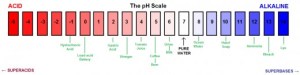
man, this diagram is about as exciting as an unsalted, stale pretzel but you get the point

man, this diagram is about as exciting as an unsalted, stale pretzel but you get the point

And here’s the Respiratory part of it…

So… I’m sorry to be the one to tell you this but…your cells produce volatile acid. Yeah, they’ve been doing it while you weren’t looking this entire time. Feel a little betrayed? Hey, I’m here for you. Of course, by that I mean that they produce waste in the form of CO2 (the byproduct of aerobic metabolism). That dirty ole CO2, in the presence of water, which is basically everywhere, produces H2CO3 (AKA carbonic acid which gives soft drinks that snappy fizz that burns oh so good) and your cells do this 24hrs a day 365 days a year no smoke breaks, no sick days, no time off for good behavior. Now these sneaky substances will begin to build up, alter your pH balance, and cause all manner of unhipness unless they are buffered or purged from our bodies(good word right? I may not do drugs but I am hooked on phonics). Typically since it is a volatile substance it can be released by the lungs to be set free into the atmosphere (about 15,000 mmol/day). CO2 produced by tissue cells diffuses into red blood cells. RBC’s are armed with carbonic anhydrase [every time you see the ending -ase think enzyme of course] which facilitates this fun little reaction where the wandering CO2 combines with H2O to form H+ & HCO3 and that equation, if you’re nerdy (awesome) like me and just have to know, looks like this…

[CO2 + H2O –>H2CO3 –>H+ + HCO3]

That nasty ole CO2 can now leave the red cell to be transported to the lungs in the plasma as HCO3, what the cool kids (scientists) call carbonate. The lonely H+ also gets buffered by the red cells. Now that the HCO3 has reached the lungs it will re-enter the reds and be reversibly converted back into CO2 & water by that same carbonic anhydrase. That nasty ole CO2 can now diffuse into the lung alveoli to be exhaled, released into the atmosphere like pigeons at a magic show (come on, the kid in you wants to smile).

Why does the CO2 need to be converted into carbonate in the first place if it’s just going to be converted right back into CO2? CO2 is crazy reactive and we don’t want it binding with any ole molecule willy nilly while it’s exposed in our plasma. Also, the hemaglobin protein in our red cells binds both oygen and CO2. Increased intake of CO2 results in that whole carbonic acid business whenever the CO2 makes contact with the water in our plasma which means more H+ ions will be released into the blood which, as we mentioned before, are the heart and soul of acidity in the first place.

Hey, slow down Speed Racer, where are you going? There’s more to this story…

You see that was just how our body rids itself of the CO2/volatile compounds. Cellular metabolism also produces NON-volatile acids that require a little more metabolic gynastics from our bodies(salicyclic acid, lactic acid, ketoacids). Now it is our kidneys that come into play here adding that vital buffering, “make it all better” compound, HCO3 back into the plasma so that the volatile acids can dissociate with it. So if I can take you back to chemistry 101 for a minute, pretty much all of your acidic substances H2SO4, H2PO4, etc. are going to have their hydrogen ions dissociate in water. Now that H+ can be coerced away by that molecular smooth talker HCO3 yet again, leaving the other nasty bits (technical term) to be excreted in the urine. Meanwhile the H+ joins with our HCO3 in the very same reaction we chatted about before by the very same carbonic anhydrase which frees up the CO2 again, to be released into the lungs…again.

Acidosis – reminds me of a Pink Floyd Album

considered making a drug reference here...but let's not ruin the magic

considered making a drug reference here…but let’s not ruin the magic

Many physiology texts will differentiate respiratory acid/base balance from metabolic even though they both ultimately involve the lungs at some point as a final purging step for CO2. That’s mostly due to the fact that when things go out of wack with your pH balance it is linked to either a respiratory or metabolic(kidney) impairment. The two main routes our body takes to compensate for pH is by respiring CO2 through the lungs and by excreting acidic wastes in the urine via the kidneys.

There is a considerably narrow pH range that healthy human blood tends to stay within, 7.35-7.45. When the blood pH drops below this range cellular damage can occur. So here’s the thing, we have all these fancy pants enzymes and protein complexes that make all the necessary biochemical reactions in our cells possible. Every single one of these enzymes and biochemical pathways have temperatures and pH ranges where they function best or not at all. Think of the bloodstream as an environment or habitat for our living cells.That habitat has to be maintained or those cells will cease to thrive.

Respiratory Acidosis – when CO2 attacks..

just think candy bar wrappers in the backseat and this image totally works

just think candy bar wrappers in the backseat and this image totally works

With respiratory acidosis if you are hypoventilating for some reason (not getting enough oxygen and not expelling enough CO2) the CO2 will build up in the blood (hypercapnea) like so many candybar wrappers in the backseat of a subaru packed with roadtripping Spring Breakers. The kidneys will typically look out for us, compensating with increased secretion of all that stray H+ (which is awful nice). The H+ will eventually be excreted in the urine as H2PO4 after it combines with some HPO4 that I suppose was just hanging out in the nephrons (tiny functional units) of the kidneys. The kidneys will also add HCO3 back into the plasma to buffer CO2 another day. You just gotta love those kidneys…maybe you should send a thank you note.

A number of things can lead to respiratory acidosis, but primarily anything that impairs ventilation like drugs (opiates, anesthetics, powerful sedatives), or cardiopulmonary disease can have adverse effects on your body’s respiratory buffering system.

Metabolic Acidosis – Respect the Kidneys

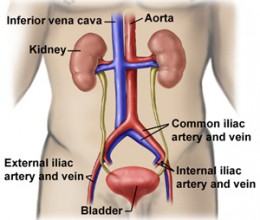
Hey, remember when I was rambling earlier about how the kidneys feed bicarbonate (HOC3) back into the bloodstream to help manage pH? (it was a good story and you really enjoyed it) Well when you have metabolic acidosis you are basically experiencing a significant decrease in plasma HCO3. So in this situation your blood is becoming more acidic because Its ability to buffer acids has been compromised in some way. This can occur in renal failure, lactic acidosis (the build up of lactate through anaerobic cell metabolism), uremia, and from toxins among other things. This can often result in hyperventilation as you gasp to bring in more oxygen into the lungs. The kidneys begin to compensate for this by secreting more Hin order to be evacuated in the urine in the form of H2PO4.

Now you’re probably saying “Whoa now, if the blood can become too acidic can’t it also become too alkaline? That’s when I give you this stunned look like “Wow, what a great question” to which I would reply…

“But that does happen..and there’s definately more to it…”

Sorry, just not in this article. Are you kidding, look how long this thing is already, but stay tuned for part II where we’ll get into Alkalosis. I promise it’ll be loaded with physiology goodness. Stay curious, stay classy, and never stop learning my friends 🙂
Oh Those Naughty Diagrams

Do diagrams and biochemical pathways make you shrivel up like cold McDonald’s fries underneath your driver’s seat? Allow me to offer some friendly advice.

Ah sweet clarity, good to the last drop…

Classic animal cell model from your youth. Note the intricate jelly bean design

Classic animal cell model from your youth. Note the intricate jelly bean design

Today we’re going to dig deep…haha no no way deep, into the pscyhe, into your most primitive, raw memories of how you first learned about the human cell. Now close your eyes and imagine (only imagine yourself closing your eyes. Please keep reading). There you are, adorable, innocent little you ready to dive in, converse first, into a brand-spankin new science textbook, all shiny and full of promise. Your teacher instructs all of you to turn to the 1st chapter and there it is….the cell. The ribosomes are red and round. The mitochondria are not unlike yellow jelly bellies, and have you ever seen a smoother endoplasmic reticulum? I doubt it. So you’re staring intently at this artist’s rendition of the cell, and it’s huge…like really huge. Now keep in mind that kids are sponges right, you show them a powerful representative image of a cell and explain to them that it’s the most basic unit of all living things and they will remember it. There’s just one thing…cells aren’t huge they’re teeny tiny, and cells don’t just have two or three ribosomes. They have thousands. No, I’m not picking on teachers or textbooks because honestly, biology is intensly complex at times and it’s good to get a firm grasp of the basics. Besides, any decent teacher or text will go on to explain that cells are tiny and that you have a couple trillion in your body. Most kids get that. What I’m suggesting is that when it comes time to add more dimensions to our learning we have a hard time letting go and don’t realize it. A REALLY really hard time. I can’t tell you how many times some one will mention the state of Maine and a giant lobster pops inside my head.

Let’s fast forward to highschool biology class. I’ll never forget it. It was 8am – the caustic waft of chalk dust twirling in the cold, fluorescent light and through the smoke my drowsy, adolescent eyes make out an old, familiar sight traced on the chalk board, the human cell. For a time, all is well. Suddenly, the two dimensional world of my childhood takes a nasty turn down a sketchy alley called “Cellular Metabolism.” The teacher directs our attention to the humble mitochondria “the power house of the cell.” She begins to speak of biochemical pathways, of co-factors, glucose, and enzymes…oh my! It is a complex world indeed, but try as I might to wrap my head around these new concepts all I see are the same two-dimensional jelly beans from my youth.

There are those of us who can compartmentalize, who can simply take that new information and memorize it…learn all the sequences and reactions, and simply spit them back out when test time comes. I call this kind of learning “renting.” That knowledge has no depth or dimensions  It doesn’t really belong to you. Understanding where reactions take place in the cell, how often they occur, and the alternatives to those reactions is an experience that belongs to you. Yes, if you have the ability to just absorb pure facts and recall them my hat goes off to you, but we as students should always always always make an effort to incorporate a sense of scale into our learning or it WILL come back to haunt us. Allow me to demonstrate.

the tune goes like this…

Let’s say I just received new information: “Chickpeas are an excellent source of protein, but they do not provide a complete source of protein.”

I will now trace back through the steps of what I already know. WARNING this may seem tedious and possibly annoying to many of you, but it really does help.

Chickpeas are an excellent source of amino acids, which form chains that make up protein. There are 9 essential amino acids that our body’s need to function. Amino acid chains are produced by ribosomes in our cells from information contained within messenger RNA which is transcribed from a gene which is a specific sequence of DNA, which is tightly bound and coiled around histone proteins. Many tightly packaged bundles of DNA and protein make up chromosomes contained within the nucleus of our cells. The ENd.

No, I don’t do this for every morsel of new information I learn, but it is a great way to ground yourself when you begin to feel overwhelmed.

Now when it comes to biochemical pathways don’t let those intimidate you either. Allow me to quote myself from another lesson;

When approaching any biochemical pathway for the first time you should always ask yourself what factors (enzymes, organic molecules, catalytic elements) are already present within the system. Next, you should ask yourself what factors will be introduced into that system. That is the rhythm of a pathway; what’s already there, what gets introduced, and what gets made when we put them together.”

I just thought that I would take this time to throw out a friendly reminder that when things start to get a little hot and heavy in the classroom (or the boardroom) seek out that sense of scale. That is all for now my friends. As always, stay classy and never stop learning.

Lightly Salted

mmm…salt. Good to the last blood pressure raising drop. No, salt isn’t evil. It’s necessary for maintaining the zen-like balance of our bodies, but perhaps it’s time to give our nutritional knowledge a total makeover.

This is almost as much salt as Paula's recipe called for.

This is almost as much salt as Paula’s recipe called for.

Spend enough time playing high stakes mahjong with health enthusiasts outside of the local smoothie shop and it won’t be long before “salt” is thrown around like a four letter word when things get a little heated (and salt is 4 letters…how perfect is that?). How did salt, the Ying to pepper’s Yang, land itself on America’s most wanted list? I blame its devious ability to raise blood pressure. It is the sodium component of salt that is responsible for influencing the absorption of water by our bodies. Table salt, or sodium chloride (NaCl) is the main source of sodium in our diets. So for many of us, lowering our sodium levels is pretty much synonymous with cutting back on salt.

Aldosterone and Friends

Oh yeah, this is where all the magic happens.

Oh yeah, this is where all the magic happens.

Alright people let’s talk seriously about urine for a second and try not to go “eewww he’s talking about pee”(well you can if you want to). Urine is what you get when blood plasma has been scrupulously filtered by the kidneys so that whatever the body isn’t using right then and there (salts, nitrogenous waste, elf magic) doesn’t get reabsorbed back into the circulation. So urine is actually just ultra filtered plasma…and that’s not so sketchy is it? The chemistry of our bodies is largely regulated by how our kidneys produce urine…salty like the dead sea one day…watered down like cheap beer the next.

Our always handy adrenal cortex produces the hormone aldosterone in response to physiological cues (not voodoo as I previously suspected). Aldosterone’s main magic trick is to increase the overall blood volume. Guess how..by increasing the reabsorption of sodium by the teeny tiny functional units of the kidney (nephrons). Water kind of plays follow the leader with sodium. So if sodium goes out then water comes back in.

So that means….

The body can manipulate the concentration of water in the blood by manipulating the levels of sodium. The kidneys are able to retain sodium which in turn allows water to flow back into circulation. Since water makes up more than 50% of the total volume of blood, sodium’s ability to lead water alters the blood volume through the vessels, and the increase in blood volume increases the amount of pressure that the blood flow exerts on vessel walls. Too much salt in the diet overloads your kidney’s capacity to deal (technical term). The body has a nifty early warning system for when your salt/water mojo is out of whack – thirst. It’s not just for Gatorade commercials.

SHAZAAAM!!!! Ok that’s enough physio for now. You can let the kids back in the room..scary monsters are gone.

There is a hefty percentage of Americans that exceed the maximum daily recommendation of sodium (less than 2400 mg) in the first half of the day. Fast foods and processed foods are largely to blame whereby the products that we consume have already been seasoned, often with a great deal more salt than we would have added ourselves (have you blamed your cheeseburger for anything today? Please take a moment and do that). In fact, canned soups are a notorious source of sodium in most household kitchen cabinets. “Naughty chicken noodle soup! Go in the corner and think about what you’ve done.”

So buy more fresh ingredients. Prepare more of your own meals. Stay hydrated, stay classy, and never stop learning my friends.

Caffeination Nation

Has a cup of coffee ever made you feel “more like yourself?” If you miss your morning cup do you morph into a ravenous troll capable of laying waste to countless villages standing between you and the coffee maker? Let’s unmask the secret sorcery of caffeine.

You should've seen the scone that came with this...lots of crumbs left on the breakroom table

You should’ve seen the scone that came with this…lots of crumbs left on the breakroom table

Oh yeah, I know how big this topic is and frankly I’m sick of hiding from it. What is caffeine and how does it work? BAM!! I just went there, and once a question has been asked there is no taking it back. So let’s play a little academic operation and see what’s just beneath the surface. I’m ready to put the tiny scalpels to this curious query and I don’t care if I get shocked touching the sides! (This is only my 3rd cup of coffee in two hours)

Neurons, Adenosine, and Cantankerous Caffeine Seat Stealers…

Meet adenosine, a mild mannered neurotransmitter (transmits chemical signals from one neuron cell to another) that is very good at inhibiting central nervous system activity. When adenosine is let loose in the blood stream to dock with receptors it likes to slow things way . . . way . . . doooowwwn. Levels of Adenosine build up with each hour we are awake, gradually “suppressing arousal” as the cool kids (scientists) eloquently put it. This is of course a vital evolutionary adaption since this action eventually leads to sleep – maybe you’ve heard of it – which we all need to do on a daily basis so that our big ole, multitasking, glucose powered, mammalian brains don’t blow a fuse or something. Adenosine has its very own specialized neural receptors. When some other molecule with a similar molecular structure, like caffeine, sits in adenosine’s chair then a very different reaction can take place.

Oh boy, this always happens when Caffeine comes to town...wild 80's shenanigans!

Oh boy, this always happens when Caffeine comes to town…wild 80’s shenanigans!

That charismatic caffeine is more like a party animal in sheep’s clothing that stimulates neurological activity rather than slowing it down. Caffeine triggers increased neuron firing that the pituitary senses and says “whoa now, do we have a fight or flight situation going on here or what?” You see, some of those receptors activate epineprine and norepinephrine, the chemical Ying and Yang (technical term) of our evolved stress response. That could explain why we sometimes get the nervous jitters if we’ve been hitting the grounds too many times in one morning.

Caffeine’s greatest hits…

  • diuretic – causes the body to lose water and you know I don’t mean by sweating
  • classified as a central nervous system stimulant – (messes wit yo mind) increases the firing of neurons
  • antagonist to adenosine – tosses Adenosine’s jacket on the floor and sits in its chair
  • activation of epinephrine and norepinephrine receptors – triggering the mild to “yikes” physiological manifestations of the stress/fight or flight response but in moderate amounts stimulates brain function, increases alertness
  • affects the release of dopamine – the neurotransmitter affecting movement control, emotional response, and the capacity to experience pain and pleasure..which could explain why we with caffeine withdrawal tend to get the blues when the pitcher of Joe runs dry.

Allow me to quote the cool kids (French researchers) Nehlig, Daval, & Debry at the always charming Universite de Nancy I in France 1992:

“Because caffeine is both water-soluble and lipid-soluble, it readily crosses the blood–brain barrier that separates the bloodstream from the interior of the brain. Once in the brain, the principal mode of action is as a nonselective antagonist of adenosine receptors” Yeah, I think we about covered that.

Ah yes, we can’t forget the Liver…

The liver has a fun enzyme called cytochrome P450 oxidase that metabolizes caffeine into a number of chemical byproducts. One of these chemicals, theobromine, contained in chocolate causes blood vessel dilation and increases urine flow which is why it has been used to treat high blood pressure.

A lot of Docs suggest no more than 200mg per day, or if you have your metric conversion tables out that’s two 5ounce cups of coffee a day, but it varies with sex, body size, and your personal sensitivity to caffeine. So if you’re small, sexy, and sensitive let’s stick to two cups for me ok. Hey, I care.

Yup, it’s still a drug so…

Know the signs.

Know the signs.

Caffeine withdrawal symptoms can include: severe headaches, muscle aches, temporary feelings of depression, and irritability. Know when it’s time to cut back and give tea a chance.

As always stay classy my friends and never stop learning.

Have You Thanked Your Cholesterol Lately?

“Good and Bad” cholesterol…really? In this age of information, high tech toys and fancy schmancy terminology is that the best that we can do? That’s like saying cats go meow or dogs go bow wow. I think we can stomach the truth [unintended pun]. There’s a little more to the story of cholesterol than making burger wrappers soggy or fueling Paula Deen’s “Ya’ll.” Stay tuned..

Your fat is lying to you..

6409413_f260Even in this information age so many of us are still manipulated by what I call (as of 5 minutes ago) “catch phrase science.” We do love our misleading names don’t we. I would go so far as to say that in this country misnaming things is as much of a past time as football tailgate parties, apple pie, or reality television. You know what? We’re better than that my friends.

It seems to me that these days you can’t walk into a burger shack or put knife to margarine spread without some granola eating health nut clearing their throats about good and bad cholesterol. DISCLAIMER – [ I have only the deepest respect and admiration for granola eating health nuts and the overwhelmingly positive influence of their Kashi bar commercials.]

Evil Wizard Saruman inaccurately portrayed here plotting to enslave human race with trans fatssource:http://vegetanivel2.deviantart.com/art/Saruman-Final-213864892

Evil Wizard Saruman inaccurately portrayed here plotting to enslave human race with trans fats
source:http://vegetanivel2.deviantart.com/art/Saruman-Final-213864892

My friends, cholesterol is not a four letter word (literally or figuratively). It’s not the curse of an evil wizard as a means of killing off the hobbits. Cholesterol is a natural substance that our bodies use to construct cell membranes. The cholesterol component of the membrane is what contributes to the fluidity and permeability (allowing substances to pass freely in and out) of the cell. Scientifically speaking, if rhythm & blues had a molecular form it would probably look like cholesterol. We just so happen to have a couple trillion cells that make up our bodies that need to be replaced when they get destroyed or grow old and die like they are supposed to (not that I think everything old needs to die, unless it’s taking up a lot of space). So a small amount of cholesterol is necessary to keep our cells tap dancing and happy. Cholesterol is also one of the principle components of steroid hormones. Hormones work to regulate all manner of bodily function from metabolism to sexual maturity and reproduction which is also…fun.

When Cholesterols Attack….

So what’s with the “Good vs. Bad” cholesterol talk you ask? Excellent question, well done. You see our bodies use cholesterol but only in small amounts. What cholesterol we don’t need right then and there gets transported to the liver and is later broken down with the aid of bile and pancreatic lipase. The catch is that cholesterol doesn’t mix well with water. Blood is mostly water so anything being transported through the blood stream needs to be water soluble, and thus should dissolve in water. The molecular structure of cholesterol “ain’t havin that,” chemically speaking. So to solve this problem our bodies package those feisty cholesterol molecules with protein. What we’ve come to call good and bad cholesterol, HDL (high density lipoprotein) and LDL (low density lipoprotein) are actually protein carriers bound to cholesterol molecules. As long as we aren’t taking in too much cholesterol from our diet it’s all good (physiologically speaking). When we get carried away with our cholesterol intake the body needs to produce more carrier protein to move the fat about. These are the low density variety. They are larger and bulkier than their high density counterpart and have this nasty habit of collecting along the walls of blood vessels. This is where the “Bad cholesterol” thing comes into play. When these are allowed to build up, you get a kind of epic plumbing problem where the blood flow through those vessels gets restricted, increasing blood pressure. If that blood flow is completely blocked from fat build up then that could lead to a heart attack and I’m afraid I don’t have any jokes for those…bah dum bump.

Now your HDL (high density lipoprotein) or as I like to call it “the good stuff” is a whole different story. These carriers are smaller, denser, and actually help to remove cholesterol from the blood. We need both forms to function, but as is so often the case with the body, it’s all about maintaining balance among the two. The American Heart Association actually sets a value for that zen-like balance, recommending that we not let our HDL levels go below 40 mg/dl (routine blood tests will tell you that). Apparently letting our levels get this low in the blood prevents those mad skilled lipoproteins from being all they can be when it comes to protecting our hearts.

Well of course there is way more to this gentle art of lowering one’s cholesterol in order to live strong, kick ass, and swing dance another day but hey, you don’t need me to give you all the answers. In this crazy information age let your questions be your guide my fellow wisdom seekers. As for me, it’s bedtime. Until next time…

Just Breathe

What makes this wiseguy think he could possibly possess the wealth of knowledge to cover a subject as familiar, as fundamentally elemental as breathing? What nerve. What raw, untamed, audacity, arrogance…courage (please ladies, try to focus). Yeah, I’m kind of excited too. Let’s get into it!

I felt the same way when I lost my tiny car in the Disneyland parking lot.

I felt the same way when I lost my tiny car in the Disneyland parking lot.

Sorry, you won’t find some dusty ole “from the top” general biology review about the way in which terrestrial organisms evolved to tolerate and then utilize oxygen in their metabolism on here. Who has time for that? (that’s another article) No sir, we’re focusing this talk on human physiology. It’s all about us baby, the tool users, opposable thumbs waved high…USA! USA! USA! Sorry. Ok, so my grasp of comparative anatomy is severely limited but the nuts and bolts of the human respiratory system will just as easily huff, puff, and blow your mind.

The complexity of breathing is really a matter of what perspective you are looking at it from. It has an anatomical side, a fluid dynamics aspect, and a biochemical aspect. Well hell, let’s just chat about them all…just a little, so they (my science critics) can say that we tried 😛

A Word or Two about Biomechanics…

We move air in and out of our lungs by changing the shape of our diaphragm muscles which get their orders directly from the medulla oblongata of the brain (which is always fun to say). The muscles contract, pull air in like a dirt devil vacuum, and we inhale. When the muscles relax, or flatten and push air out like really ugly bag pipes, we exhale. That is breathing from a basic mechanical point of view, but I know that won’t satisfy you will it? Hellz to the no! Let’s talk about gas exchange.

Respect the Lungs

I know it's a creepy diagram but boy howdy do I love that sweater!

I know it’s a creepy diagram but boy howdy do I love that sweater!

What you should appreciate about the lungs as organs is the way in which they interact with the external environment. They are not only exposed to the air but are able to manipulate it in such a way as to allow the oxygen component of the air to diffuse into the bloodstream by way of the capillaries. To understand the diffusion of oxygen into the bloodstream you must visualize the way in which the airways leading to the lungs branch and articulate into smaller and smaller vessels. Our respiratory anatomy really reminds me of the root system of a cedar tree. From our mouths the air flows down our trachea (wind pipe), which splits at a fork in the road at our left and right lungs into two primary bronchi. The bronchi of each side (feeding each lung) spread out and branch until they can’t branch any further.

What Rhymes with Alveoli?

you'll find these handsome devils at the very ends of our bronchioles.

you’ll find these handsome devils at the very ends of our bronchioles.

If we took our hypothetical magnifying glass and looked at the inside of the lungs…got up close and personal at about 400 – 500x magnification, then we would be able to see the point where the bronchioles branch no further, the alveoli. These are tiny, no seriously, TINY sacs of tissue covered on all sides by blood rich capillaries. This is the site of gas exchange, where the vessels have branched down so thin that there is a single layer of red blood cells ready to accept molecular oxygen as it diffuses from the air space of each alveolar sac. Those red cells exchange CO2, bound to hemoglobin molecules, for that sweet sweet oxygen

Woody seen here taking questions after his lecture on respiratory pathophysiology

Woody seen here taking questions after his lecture on respiratory pathophysiology

The capillaries that transport deoxygenated blood to the alveoli are fed by the pulmonary arteries and the capillaries siphoning oxygenated blood away from the alveoli to the heart are fed by the pulmonary veins. The heart feeds the blood supply to the lungs and receives freshly oxygenated blood from the lungs to pump to the rest of the body. So it is certainly no coincidence that your heart and lungs are anatomical bunk mates with the left and right lung literally draped around the heart like a magician’s cape. Also, remember that we are not just bringing oxygen into our body but letting carbon dioxide (which can be thought of as spent air) out of our bodies. So you should have some appreciation at this point for how well our bodies do this “simple” task 24/7 without mixing the good air with the bad or as Woody from Toy Story would say “poisoning the water hole.”(honk if you like obscure Pixar references)

I could probably go on and on about the respiratory system and shifting oxygen dissociation curves but your eyes are probably glazing over about now and I’m missing a Burn Notice marathon. So stay classy my friends and never stop learning.

https://forgottenphysiology.wordpress.com/2013/02/24/the-zen-of-cardiac-blood-flow/