Balancing Act

Well it’s about time! pH balance is fascinating stuff. I guarantee this is one of the spiciest topics yet..3 peppers, Scout’s honor (was never a boy scout). We just can’t rap about physiology without giving a shot out to our body’s mad acid/base buffering skillz. Party people throw your hands up…if you want to, and stay tuned.

makes my back sore just looking at her

makes my back sore just looking at her

That’s right my friends we’re talking about acids and bases today! DJ, turn the music up because we’re about to get all the way down. The body loves to stay in balance…oh wait, that is a painfully broad statement isn’t it? Put a different way, if there is one thing the body HATES it’s being out of balance. In this case we’re talking about pH. If you don’t remember basic chemistry 101 or never had it (consider yourself lucky), pH deals with acids and bases, and that whole pH scale, which measures hydrogen ions (H+ ions vs OH ions) in a solution. The presence and concentration of those ions give substances distinct chemical characteristics…the neutral, harmless purr of a glass of milk or the flesh eating burn of battery acid. The scale has a range of 0 to 14 with 7 being neutral. So pure water kept close to room temperature would measure at about 7 and something like orange juice with a pH of 3 would be lower on the scale and thus more acidic. Basic, or alkaline substances would be higher in pH, as in higher than 7.

man, this diagram is about as exciting as an unsalted, stale pretzel but you get the point

man, this diagram is about as exciting as an unsalted, stale pretzel but you get the point

And here’s the Respiratory part of it…

So… I’m sorry to be the one to tell you this but…your cells produce volatile acid. Yeah, they’ve been doing it while you weren’t looking this entire time. Feel a little betrayed? Hey, I’m here for you. Of course, by that I mean that they produce waste in the form of CO2 (the byproduct of aerobic metabolism). That dirty ole CO2, in the presence of water, which is basically everywhere, produces H2CO3 (AKA carbonic acid which gives soft drinks that snappy fizz that burns oh so good) and your cells do this 24hrs a day 365 days a year no smoke breaks, no sick days, no time off for good behavior. Now these sneaky substances will begin to build up, alter your pH balance, and cause all manner of unhipness unless they are buffered or purged from our bodies(good word right? I may not do drugs but I am hooked on phonics). Typically since it is a volatile substance it can be released by the lungs to be set free into the atmosphere (about 15,000 mmol/day). CO2 produced by tissue cells diffuses into red blood cells. RBC’s are armed with carbonic anhydrase [every time you see the ending -ase think enzyme of course] which facilitates this fun little reaction where the wandering CO2 combines with H2O to form H+ & HCO3 and that equation, if you’re nerdy (awesome) like me and just have to know, looks like this…

[CO2 + H2O –>H2CO3 –>H+ + HCO3]

That nasty ole CO2 can now leave the red cell to be transported to the lungs in the plasma as HCO3, what the cool kids (scientists) call carbonate. The lonely H+ also gets buffered by the red cells. Now that the HCO3 has reached the lungs it will re-enter the reds and be reversibly converted back into CO2 & water by that same carbonic anhydrase. That nasty ole CO2 can now diffuse into the lung alveoli to be exhaled, released into the atmosphere like pigeons at a magic show (come on, the kid in you wants to smile).

Why does the CO2 need to be converted into carbonate in the first place if it’s just going to be converted right back into CO2? CO2 is crazy reactive and we don’t want it binding with any ole molecule willy nilly while it’s exposed in our plasma. Also, the hemaglobin protein in our red cells binds both oygen and CO2. Increased intake of CO2 results in that whole carbonic acid business whenever the CO2 makes contact with the water in our plasma which means more H+ ions will be released into the blood which, as we mentioned before, are the heart and soul of acidity in the first place.

Hey, slow down Speed Racer, where are you going? There’s more to this story…

You see that was just how our body rids itself of the CO2/volatile compounds. Cellular metabolism also produces NON-volatile acids that require a little more metabolic gynastics from our bodies(salicyclic acid, lactic acid, ketoacids). Now it is our kidneys that come into play here adding that vital buffering, “make it all better” compound, HCO3 back into the plasma so that the volatile acids can dissociate with it. So if I can take you back to chemistry 101 for a minute, pretty much all of your acidic substances H2SO4, H2PO4, etc. are going to have their hydrogen ions dissociate in water. Now that H+ can be coerced away by that molecular smooth talker HCO3 yet again, leaving the other nasty bits (technical term) to be excreted in the urine. Meanwhile the H+ joins with our HCO3 in the very same reaction we chatted about before by the very same carbonic anhydrase which frees up the CO2 again, to be released into the lungs…again.

Acidosis – reminds me of a Pink Floyd Album

considered making a drug reference here...but let's not ruin the magic

considered making a drug reference here…but let’s not ruin the magic

Many physiology texts will differentiate respiratory acid/base balance from metabolic even though they both ultimately involve the lungs at some point as a final purging step for CO2. That’s mostly due to the fact that when things go out of wack with your pH balance it is linked to either a respiratory or metabolic(kidney) impairment. The two main routes our body takes to compensate for pH is by respiring CO2 through the lungs and by excreting acidic wastes in the urine via the kidneys.

There is a considerably narrow pH range that healthy human blood tends to stay within, 7.35-7.45. When the blood pH drops below this range cellular damage can occur. So here’s the thing, we have all these fancy pants enzymes and protein complexes that make all the necessary biochemical reactions in our cells possible. Every single one of these enzymes and biochemical pathways have temperatures and pH ranges where they function best or not at all. Think of the bloodstream as an environment or habitat for our living cells.That habitat has to be maintained or those cells will cease to thrive.

Respiratory Acidosis – when CO2 attacks..

just think candy bar wrappers in the backseat and this image totally works

just think candy bar wrappers in the backseat and this image totally works

With respiratory acidosis if you are hypoventilating for some reason (not getting enough oxygen and not expelling enough CO2) the CO2 will build up in the blood (hypercapnea) like so many candybar wrappers in the backseat of a subaru packed with roadtripping Spring Breakers. The kidneys will typically look out for us, compensating with increased secretion of all that stray H+ (which is awful nice). The H+ will eventually be excreted in the urine as H2PO4 after it combines with some HPO4 that I suppose was just hanging out in the nephrons (tiny functional units) of the kidneys. The kidneys will also add HCO3 back into the plasma to buffer CO2 another day. You just gotta love those kidneys…maybe you should send a thank you note.

A number of things can lead to respiratory acidosis, but primarily anything that impairs ventilation like drugs (opiates, anesthetics, powerful sedatives), or cardiopulmonary disease can have adverse effects on your body’s respiratory buffering system.

Metabolic Acidosis – Respect the Kidneys

Hey, remember when I was rambling earlier about how the kidneys feed bicarbonate (HOC3) back into the bloodstream to help manage pH? (it was a good story and you really enjoyed it) Well when you have metabolic acidosis you are basically experiencing a significant decrease in plasma HCO3. So in this situation your blood is becoming more acidic because Its ability to buffer acids has been compromised in some way. This can occur in renal failure, lactic acidosis (the build up of lactate through anaerobic cell metabolism), uremia, and from toxins among other things. This can often result in hyperventilation as you gasp to bring in more oxygen into the lungs. The kidneys begin to compensate for this by secreting more Hin order to be evacuated in the urine in the form of H2PO4.

Now you’re probably saying “Whoa now, if the blood can become too acidic can’t it also become too alkaline? That’s when I give you this stunned look like “Wow, what a great question” to which I would reply…

“But that does happen..and there’s definately more to it…”

Sorry, just not in this article. Are you kidding, look how long this thing is already, but stay tuned for part II where we’ll get into Alkalosis. I promise it’ll be loaded with physiology goodness. Stay curious, stay classy, and never stop learning my friends 🙂

Just Breathe

What makes this wiseguy think he could possibly possess the wealth of knowledge to cover a subject as familiar, as fundamentally elemental as breathing? What nerve. What raw, untamed, audacity, arrogance…courage (please ladies, try to focus). Yeah, I’m kind of excited too. Let’s get into it!

I felt the same way when I lost my tiny car in the Disneyland parking lot.

I felt the same way when I lost my tiny car in the Disneyland parking lot.

Sorry, you won’t find some dusty ole “from the top” general biology review about the way in which terrestrial organisms evolved to tolerate and then utilize oxygen in their metabolism on here. Who has time for that? (that’s another article) No sir, we’re focusing this talk on human physiology. It’s all about us baby, the tool users, opposable thumbs waved high…USA! USA! USA! Sorry. Ok, so my grasp of comparative anatomy is severely limited but the nuts and bolts of the human respiratory system will just as easily huff, puff, and blow your mind.

The complexity of breathing is really a matter of what perspective you are looking at it from. It has an anatomical side, a fluid dynamics aspect, and a biochemical aspect. Well hell, let’s just chat about them all…just a little, so they (my science critics) can say that we tried 😛

A Word or Two about Biomechanics…

We move air in and out of our lungs by changing the shape of our diaphragm muscles which get their orders directly from the medulla oblongata of the brain (which is always fun to say). The muscles contract, pull air in like a dirt devil vacuum, and we inhale. When the muscles relax, or flatten and push air out like really ugly bag pipes, we exhale. That is breathing from a basic mechanical point of view, but I know that won’t satisfy you will it? Hellz to the no! Let’s talk about gas exchange.

Respect the Lungs

I know it's a creepy diagram but boy howdy do I love that sweater!

I know it’s a creepy diagram but boy howdy do I love that sweater!

What you should appreciate about the lungs as organs is the way in which they interact with the external environment. They are not only exposed to the air but are able to manipulate it in such a way as to allow the oxygen component of the air to diffuse into the bloodstream by way of the capillaries. To understand the diffusion of oxygen into the bloodstream you must visualize the way in which the airways leading to the lungs branch and articulate into smaller and smaller vessels. Our respiratory anatomy really reminds me of the root system of a cedar tree. From our mouths the air flows down our trachea (wind pipe), which splits at a fork in the road at our left and right lungs into two primary bronchi. The bronchi of each side (feeding each lung) spread out and branch until they can’t branch any further.

What Rhymes with Alveoli?

you'll find these handsome devils at the very ends of our bronchioles.

you’ll find these handsome devils at the very ends of our bronchioles.

If we took our hypothetical magnifying glass and looked at the inside of the lungs…got up close and personal at about 400 – 500x magnification, then we would be able to see the point where the bronchioles branch no further, the alveoli. These are tiny, no seriously, TINY sacs of tissue covered on all sides by blood rich capillaries. This is the site of gas exchange, where the vessels have branched down so thin that there is a single layer of red blood cells ready to accept molecular oxygen as it diffuses from the air space of each alveolar sac. Those red cells exchange CO2, bound to hemoglobin molecules, for that sweet sweet oxygen

Woody seen here taking questions after his lecture on respiratory pathophysiology

Woody seen here taking questions after his lecture on respiratory pathophysiology

The capillaries that transport deoxygenated blood to the alveoli are fed by the pulmonary arteries and the capillaries siphoning oxygenated blood away from the alveoli to the heart are fed by the pulmonary veins. The heart feeds the blood supply to the lungs and receives freshly oxygenated blood from the lungs to pump to the rest of the body. So it is certainly no coincidence that your heart and lungs are anatomical bunk mates with the left and right lung literally draped around the heart like a magician’s cape. Also, remember that we are not just bringing oxygen into our body but letting carbon dioxide (which can be thought of as spent air) out of our bodies. So you should have some appreciation at this point for how well our bodies do this “simple” task 24/7 without mixing the good air with the bad or as Woody from Toy Story would say “poisoning the water hole.”(honk if you like obscure Pixar references)

I could probably go on and on about the respiratory system and shifting oxygen dissociation curves but your eyes are probably glazing over about now and I’m missing a Burn Notice marathon. So stay classy my friends and never stop learning.

https://forgottenphysiology.wordpress.com/2013/02/24/the-zen-of-cardiac-blood-flow/

True Blood

Blood, in our day and age, plays nothing more than a supporting role to teen vampires on the big screens with perfect bed hair. Well today the fake fangs are coming off, the microscopes are coming out, and we’re giving blood the red carpet treatment it deserves in this segment of Forgotten Physiology.

6952917_f260Alright, take a deep breath and let it out slowly. We’ll need to shake off all those icky vibes we get whenever we mention the word “blood.” It’s time to take a closer look at that crazy vampire juice, and by closer I mean at roughly 400x magnification. I’ll wait till you catch up. Just say when. Outstanding, let’s get to it!

Oh sure, I realize that anyone who’s learned to turn on a computer or operate a stove when their parents aren’t home has probably figured out by now that our blood is composed of red blood cells. There are a few white blood cells floating around in the mix as well, fighting off infections but that’s for another article. Today I want to focus on the true work horses of our circulatory system, the red blood cells.

What is blood exactly? No wait, that’s a boring, safe question. Perhaps a better question might be why do we have blood? I mean what’s the evolutionary advantage of having a bunch of flat, pink disks floating around in a murky straw colored, neutral pH solution at 37 degrees Celsius? It’s all about clever chemistry my friends, gas exchange to be more precise. Red blood cells, or erythrocytes, as the cool kids (scientists) call them are nothing more than transport vessels. They are not unlike tiny FedEx drivers transporting their oxygen payloads from the lungs to the cellular tissues of the body (I never liked the term tissue…just feels dirty) “How do they accomplish this?” you cunningly ask. Ha! Well played.

Here’s How

the steamy, Fe2O3 love connection that allows iron oxides to form can explain iron rich hemoglobin's affinity for O2

the steamy, Fe2O3 love connection that allows iron oxides to form can explain iron rich hemoglobin’s affinity for O2

Inside each red cell are specialized proteins called hemoglobin and inside these are tiny iron molecules. Like all proteins they are composed of certain amino acid chains that only fold a certain way, but what makes them unique and a hit at all the parties are their ability to cling on to that sweet, sweet iron. It’s not just any ole iron, but the ionic “taster’s choice” ferrous form of iron, Fe2+. These iron molecules have a real knack for accepting molecular oxygen, or O2. If you’ll recall, metallic iron tends to rust or “oxidize” when exposed to moisture and air. Once you’ve made that connection feel free to go “Ahhhh!”

There is however, another gas that our red cells love playing catch with and that’s carbon dioxide, CO2. You know that ole cellular metabolism that our cells go through to convert carbohydrates into energy is messy business. If it weren’t for our red cells that CO2 (the byproduct of respiration) would build up in our tissues slowly poisoning us, which is not ideal. The very same red cells transport that stuff from our tissues to the lungs for gas exchange, or as it’s known on the mean streets, “exhaling.” The other advantage red cells have for shipping gas to and fro is the fact that each mature red cell loses it’s nucleus. This makes room for gas exchange to take place, but it also limits the lifespan of the red cell. A mature (non-nucleated) red lives about 120 days. By that time it will have lost it’s ability to metabolize, let its facebook page expire, let himself go. Whatever, it’s just too old and worn down to be effective.

That is the basic mambo of our red cells. 24 hours a day, 365 days a year they carryoxygen to cells and carbon dioxide away from the cells. It’s pretty basic, reliable stuff. Blood is also quite honest. Those red cells travel through the vessels surrounded in fluid, which is mostly water and dissolved minerals, nutrients, proteins and gases. This funky fluid, or plasma interacts with everything, all the tissues of the body. So when you come down with an infection or any ailment for that matter, physicians, nurses, and lab specialists like myself rely on the blood to give us all the juicy gossip about what’s going down.

“psst…hey Dr. Oz, Mrs. Doe has high blood sugar today.” – Your BFF, the plasma

Now what is important to note about those red cells when it comes to testing the plasma is that they are alive. That’s right, they are still maintaining low levels of metabolism, a form of glycolysis the cool kids refer to as the Embden Meyerhof pathway (which sounds like a race track in Germany). Since these cells are alive and intact they are continually taking electrolytes in, but if those cells are ruptured they will release things like potassium and glucose back into the plasma. This can give the person examining your blood misleading and often alarming results. So if you’ve ever had your blood drawn one day and then got called back to the doctors office later to have the same tests redrawn due to “questionable results” there is a good chance that the blood was hemolyzed, i.e. those cells were ruptured in the process. Sorry about that, but it happens sometimes. Drawing blood is not an exact science and each individual’s vasculature is different. This can also happen when well meaning, handsome, young lab techs leave the tourniquet on for too long. Sorry Ms. Jackson [not her real name] I’ll lay off the cafe mochas next time.

in case you slept through the 90's, this was quality television

in case you slept through the 90’s, this was quality television

So the next time you’re enjoying Twilight recaps on Hulu, getting your finger pricked at the doctor’s office, or knocking back a cold one while watching your favorite scene from Buffy the Vampire slayer (no question, an American classic) take a moment to appreciate the rosy, red concoction that makes it all possible. Red Blood Cells, this bud’s for you.

Stay classy my friends and never stop learning 😉

Endocrine Parte dos

Apparently not even the invisible man can hide his trachea

Apparently not even the invisible man can hide his trachea

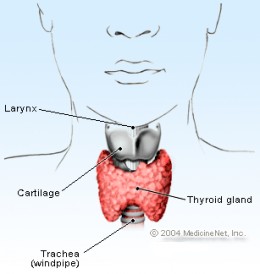
Metabolism – the way our bodies produce and utilize energy on a cell to cell basis to keep us alive to jazzercize another day is largely regulated by a funky looking, butterfly shaped, hormone secreting gland we affectionately call the thyroid.

Alright people let’s talk about the details…

It would be nice if all we needed to know about the thyroid was that it produces thyroid hormone. Yes, but you’ll never reach academic rock stardom that way so…

What we refer to as thyroid hormone is actually describing two different forms of one hormone, the active and inactive state. Iodine is a principle component of the molecule and the properties of the hormone are greatly altered by the number and arrangement of its iodine molecules. In fact, if you have a severe enough iodine deficiency in your diet you can develop an enlarged thyroid gland called a goiter, which is probably the worst looking hickie you could get without the makeout party ( I wouldn’t know).
When T4 (thyroxine) is secreted by the thyroid gland it circulates through the bloodstream inactive until it can be deiodinized and converted into its active form, T3(triiodothyronine).
Now the hormone is primed and ready to mingle, binding to cell nuclear receptors, initiating RNA transcription, protein synthesis, and kicking ass all over the place, driving our cells to burn energy, oxygen, and be all they can be.
All of this T4/T3 magic is of course made possible by our friend the pituitary gland which produces the trophic hormone TSH (thyroid stimulating hormone) which triggers the production of throid hormone by the thyroid.
In addition to increased metabolism, thyroid hormone also raises the heart rate and respiration. If we are talking about the human engine here, an increase in respiration draws in more oxygen which our bodies utilize to burn more calories. This hormone also triggers the breakdown of glycogen stores in our cells (glycogenolysis) which releases glucose back into the bloodstream making it readily available for energy.

But wait there’s more…

Parathyroid hormone (PTH) and the opposing action of Calcitonin

We’ve only discussed half of this magic butterfly’s mad skillz. There is yet another hormone produced by the thyroid that we affectionately call calcitonin which, along with parathyroid hormone from theparathryroid glands, regulates calcium levels in the blood. HOw? Excellent question…
Your parathyroid glands rest behind the thyroid, and while not getting their hands dirty with metabolic regulation, they are largely responsible for the regulation of calcium levels in the body…which is kind of a big deal.

Our bones are the largest source and sink for calcium in our bodies. So when the pressure is on to get calcium circulating in the blood again our bones play an award winning, supporting role. There are these crazy cells called osteoclasts which are basically differentiated macrophages (white cells of the bone marrow) that specialize in degrading bone. This is regulated largely by the opposing actions of parathyroid hormone and calcitonin.
When more calcium is needed in the blood PTH indirectly stimulates the formation of new osteoclasts from macrophage precursors which degrade bone minerals with the use of acid from their cellular stomachs, lysozymes. How cool is that? (feel free to say “very cool”). The role of PTH is indirect because in its absence osteoclast formation would normally be inhibited. PTH basically plays matchmaker, stimulating osteoblasts (cellular precursor) to produce stimulating factors and express certain membrane receptors. When macrophages come under the influence of these factors (and the mood is right) they differentiate into osteoclasts.

*sigh...doesn't it make you tear up with after school nostalgia?

*sigh…doesn’t it make you tear up with after school nostalgia?

These cells differentiate when chemical signals activate their membrane receptors to trigger a physical change within the cell. It’s kind of like when Tommy morphs into the white ranger whenever Zordon calls him on his gigantic 90’s cell phone (do my Power Ranger’s references turn you on ladies?Please, try to focus). When blood calcium levels are just right or too high calcitonin is released, which inhibits the action of those osteoclasts on the bone and basically tells them “nada mas.” This allows for the calcium to be reabsorbed by the bone, reducing the levels of Ca2 in the blood. Calcitonin also inhibits calcium absorption by the intestines as well as the resorption of calcium by the nephrons (tiny functional units of the kidneys) which allows it to be released in the urine when we….um…well..release our urine. PTH, on the other hand, stimulates the absorption of calicium by the intestines and promotes the production of vitamin D through various biochemical means that unfortunately can not be explained with simple Power Rangers analogies.
The actual physiological role of calcitonin is still a tad hazy however, since research has not been able to show significant changes in the regulation of calcium as a result of thyroid tumors or the removal of the thyroid (thyroidectomy).

Thyroid Gland Greatest Hits

increases basal metabolic rate, increasing the rate at which oxygen and energy are consumed

increases the rate of protein synthesis to include RNA polymerase

increases production of Na+/K+ and ATPase – the cell bound molecular generator of ATP(adenosine

triphosphate) that are cells utilize to power numerous enzymatic activities

increases the rate of glycogen breakdown (glycogenolysis) and cholesterol breakdown

increases heart and breathing rate

When Thyroids Attack

sorry, very few pictures of thyroid gland attacks in the wild. Flipper here will have to do

sorry, very few pictures of thyroid gland attacks in the wild. Flipper here will have to do

Yeah I know, something always has to go wrong doesn’t it? We just can’t have nice things.

familiarize yourself with these two prefixes – hyper v.s. hypo When you see these prefixes think of more v.s. less, overactive v.s inactive

Let’s face it, any organ or organ system intimately involved in maintaining homeostasis within the body – that zen-like state of metabolic harmony, is susceptible to malfunction. For example, when the thyroid comes under attack by antibodies from the body’s own immune system it can effect it in one of two major ways…cause the overproduction of thyroid hormone (hyperthyroidism) or it can lead to the decrease of activity or rather the ineffectiveness of the thyroid (hypothyroidism). Both conditions can range from either mild to severe with the severe cases named after the clever, tenacious science folks that researched them ergo…Hashimoto’s thyroiditis and Grave’s disease.

General Characteristics of Hypothyroidism (not necessarily associated with autoantibodies)

weight gain associated with decreased metabolic rate
hypoventilation
decreased cardiac output
lethargy
mental slowness
drooping eyelids
goiter

General Characteristics of Hyperthyroidism (not necessarily associated with autoantibodies)

weight loss associated with increased metabolic rate – (which sounds good, but it’s not in that sexy, southbeach diet way)
increased heat
increased cardiac output
tremors
weakness
goiter

Domo Arigato Mr. Hashimoto (Hashimoto’s thyroiditis)

– severe form of hypothyroidism antagonized by autoantibodies directed against the thyroid cells. It most commonly affects middle aged women. Patients exihibit chronic, severe symptoms of hypothyroidism mentioned above.

Grave’s Disease

– severe form of hyperthyroidism antagonized by autoantibodies directed against TSH receptors. This disease is also more prevalent in women. It’s signature characteristics include eye bulging, heat intolerance, nervousness, irritability, and weight loss.

Stay curious, stay classy, and never stop learning my friends

Forgotten Physiology – The Endocrine System Part 1

If someone asked you to describe the endocrine system in three words and the words “What is that?” are all that come to mind then…yeah, you should check out these articles.

5899276_f260Ah yes, the endocrine system is one of my favorite misunderstood topics in biology (did you just get chills…me too). I’ll bet that if we gathered up all of the skeletons from America’s academic closet they would all be huddled around the endocrine system for warmth. Beneath his rough exterior of ten syllable physiological names the endocrine system is just a big ole softy. However, once you learn half of what this system is capable of you’ll be happy that you never leave home without it (which would be impossible and gross).

It will be difficult. There is an [EXPLETIVE] load of hormones and chemicals involved that you’ll need to commit to memory and unfortunately, your professors will want you to “apply your knowledge” on an exam, requiring you to magically posses an intimate understanding of the facts you’ll probably stay up all night on Coke and Doritos, force feeding your brain. So let us dive into the nuts and bolts of how this system works.

It’s all about the Glands

The endocrine system is a network of ductless glands (chemical secreting glands without the fancy side channels) that secrete chemical signals called hormones directly into the bloodstream. These hormone signals communicate with organs in our bodies on a cell to cell basis, like wickedly efficient chemical text messages.

“Hey liver cells, let’s lower the blood sugar later.” – Your BFF the Pancreas.

They will tell you that this change occurs gradually but when you consider just how many trillion cells there are in the body this is really an extraordinarily rapid process.

Some Basic Anatomy

There are about 6 glands that have been granted endocrine VIP status:

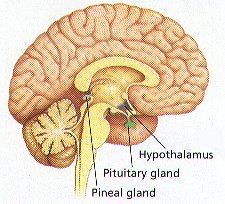
Pituitary AkA the Hypophysis(anterior & posterior) – which hangs out on the lower fore brain, riding shot gun with the hypothalamus just a few centimeters away from the spinal chord.

Thyroid – forms a mass over the trachea like a really ugly, trippie butterfly

Parathyroids – four tiny masses with each pair hitching a ride with either side of the thyroid

Adrenal glands (cortex & medulla) – you have two that ride piggie back on top of each kidney

Pancreas – parked along the lower curvature of the stomach just before it forms into the duodenum, essentially hanging along the sagging waistline of the digestive system

Gonads – general name that describes the testes in men and the ovaries in women which are located within the pelvic cavity, A.K.A the nether region, the land down under, cave of secrets, magic kingdom….yeah, well you get the idea.

The Pituitary Gland A.K.A Hypophysis

Whatever you do don’t confuse the hypophysis with the word hypothesis…seriously try not to think about how similar those two words sound.
As endocine glands go, the pituitary is like a sleek, sophisticated hybrid model. Your pituitary and hypothalamus form a neuroendocrine network of neurons and endocrine cells, granting the pituitary global access to other endocrine glands in the system. If the body were highschool the pituitary would be that trendy, oh so popular chick with everyone’s number programmed into her phone.
In many ways it is the brains of the endocrine system, sensing subtle changes in the body and signaling endocrine organs such as the thyroid or adrenal gland to produce hormones that allow the body to compensate for those changes. For example, if a decrease in blood sugar is detected by the hypothalamus the pituitary will produce a trophic hormone ACTH (adrenocorticotrophic hormone) which triggers the adrenal gland to secrete cortisol, which gradually increases the blood sugar. Trophic hormones signal the secretion of hormones by other endocrine organs. Since the pituitary is souped up with nifty neural connections it can pass notes fairly easily to all the cool kids in the class (endocrine target organs within the system) with an assortment of trophic hormones.

Pituitary Gland Top 5 Greatest Hits (Trophic hormones)

here’s a fun list of trophic hormones produced by the anterior pituitary and their functions

TSH (thyroid stimulating hormone) – stimulates the thyroid gland to secrete thyroid hormone which actively regulates metabolism….more on this later

ACTH (adrenocorticotrophic hormone) – stimulates adrenal cortex to release glucocorticoids, steroid hormones that regulate glucose

FSH (folicle stimulating hormone) – stimulates the maturation of eggs in females and the production of sperm cells in males

GH (growth hormone) – stimulates bone and muscle growth as well as the production of IGF (insulin like growth factor) produced primarily in the liver which triggers growth in many tissues. Plays a crucial role in growth and development in early childhood.

LH (Leutinizing hrmone) – induces ovulation in women and the secretion of testosterone in men…more on this later.

THe EnD..well for now…

Hey don’t worry, I’ve got way more to say about the endocrine system. It’s kind of a big topic so I’ve broken it down into a few articles for your convenience. Please keep reading and if I’ve made some incorrect or misleading points along the way let me know..but be nice. I’m sensitive 🙂 Stay classy and never stop learning.